

When federal nutrition programs like Supplemental Nutrition Assistance Program-Education were cut this fall, schools across Arizona lost a major support system that had provided resources from garden supplies to healthy lunchroom initiatives. But one small garden tucked behind a classroom in Sunnyside Unified School District continues to both feed students and teach them the skills to feed themselves.
The Garden Project, a partnership between the Teenage Parent Program and the Exceptional Education Departments, started during COVID when program director Maria Luna applied for a grant hoping to create a safe outdoor learning space. Both programs support students in accessing individualized instruction and services that recognize their unique strengths and needs. It’s meant to help them to build a strong foundation for future college, career and life readiness.
The garden started as an inclusive green space shared by students with severe disabilities, and later became a hands-on nutrition program for young parents learning how to plant, harvest, and prepare food for their families.
“The idea was initially to create a space for safe outside learning, a healthy environment to learn and destress,” Luna said.
Today, the garden operates with far fewer students than it once served. Luna said TAPP’s enrollment at Sunnyside has dropped from nearly 40 students 12 years ago to just six parenting or expecting students this year.
This summer Luna and her students planted squash and learned to make calabacitas with the harvest. Students also learn to make homemade baby food, a skill Luna sees as an essential form of future-proofing against food insecurity.
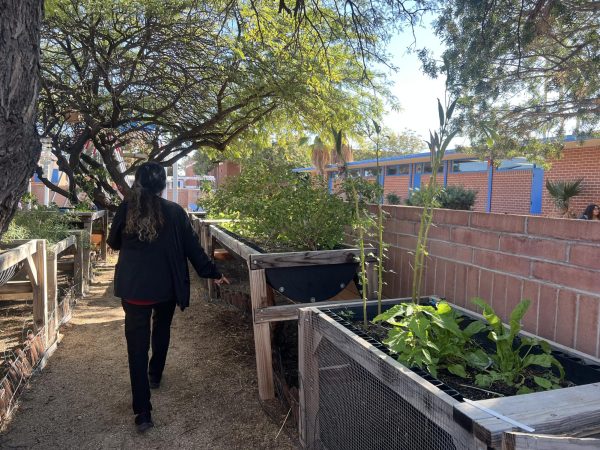
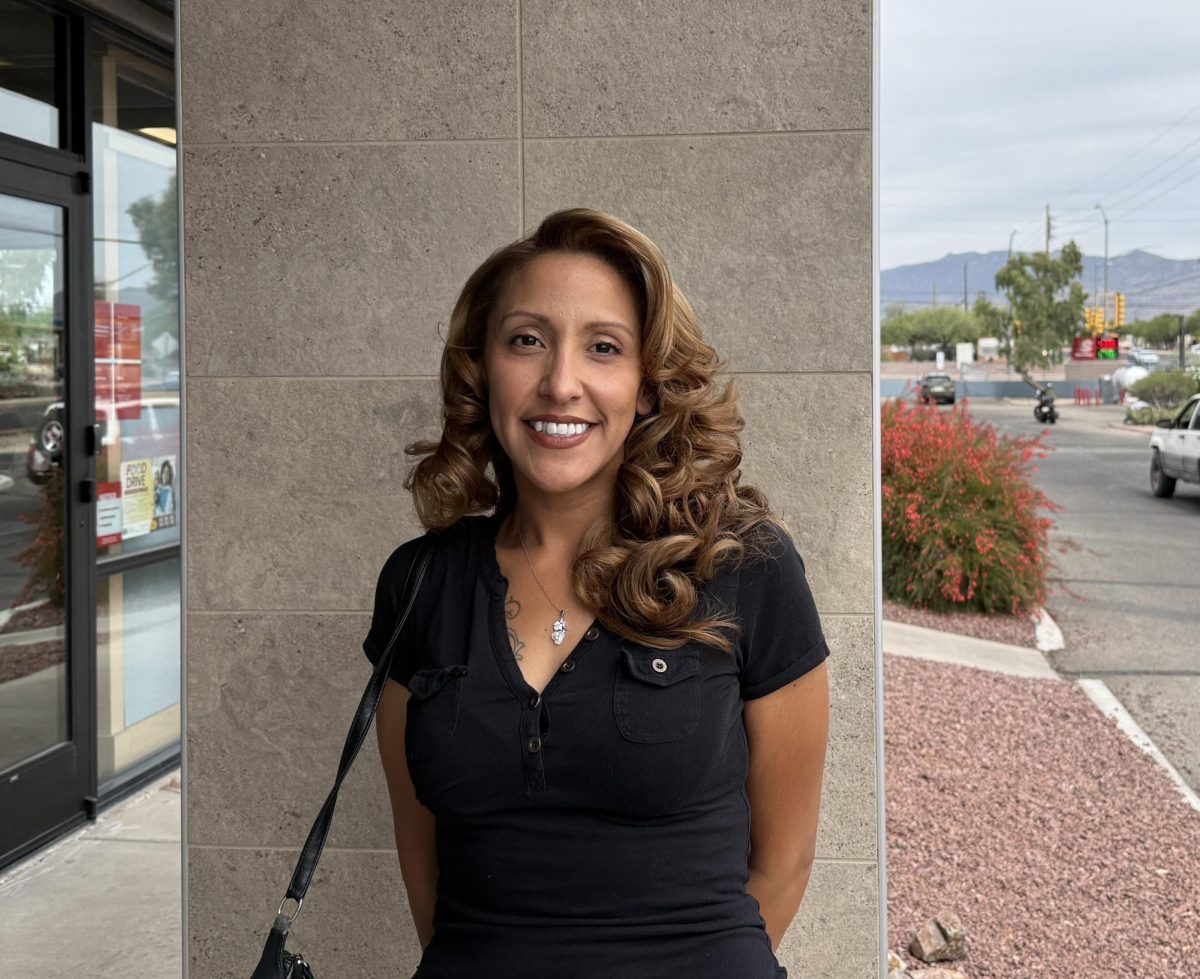
The Garden Project at Sunnyside is run by program coordinator Mara Luna. Tucson, Ariz. Nov. 25, 2025.
A garden filling nutrition education gaps
Shrinking federal support for nutrition education makes programs like Luna’s more important than ever.
SNAP-Ed, once a more than $530 million national program, was defunded in September. For years it has supported Arizona schools with materials, gardens, trails and healthy lunchroom initiatives. Now schools rely only on the Expanded Food and Nutrition Education Program , a much smaller program aimed at teaching families basic cooking, budgeting, and nutrition skills.
“SNAP-ED and EFNEP worked really well together,” said Dr. Shea Austin Cantu, director of the Community Nutrition Education Program at the University of Arizona. “SNAP-Ed wrapped around healthy infrastructure like gardens, parks, walking groups, while EFNEP worked directly with individuals and families”.
Without SNAP-Ed’s broader, community-based support, Cantu said it will be hard to make up the difference. She is now trying to rebuild a statewide nutrition education workforce with almost no funding.
“We don’t know what’s going to happen,” she said. “We’ll have to braid funding, find partners and piece things together. The mandate to provide nutrition education is still there, it is just not funded.”
For Luna, that gap is already visible. Young parents in the TAPP program feel the strain of rising food costs first, she said. The garden serves as a backup plan, not just a lesson for teaching a skill for a moment in their futures when they may need to grow their own food.
“If ever in their future there’s difficulty, I want them to know that they can always garden and grow food for their family,” Luna said.
A campus where multiple gardens fill the gap
And Luna’s garden isn’t the only space in Tucson trying to fill nutrition gaps for Tucson students.
At Sunnyside’s outdoor education center, science teacher Melany Coates has built a separate, student-designed space that blends engineering, ecosystem science, and food production.

Environmental science students designed and built this outdoor learning space during the pandemic. Tucson, Ariz., Nov. 25, 2025.
Coates’ project began in 2020, during COVID, when her environmental science students used lessons from Project Water Education Today and Watershed Management Group to design a quarter-acre rain-harvesting system.
Students have since expanded the site to include a pollinator garden, stormwater testing areas, and an aquaponics system.
“Students take more ownership because they’ve designed, built, and cared for the space,” Coates said. “They become stewards of the land.”
Coates’ space operates separately from Luna’s garden but both programs share a goal: giving students tools to understand food, water and climate challenges at a time when federal support is shrinking.
“These spaces empower students,” Coates said. “Instead of feeling helpless, they learn they can grow their own food, they can provide energy to their homes … it emboldens them to take action in their community.”
Creating conversations
Some of the most powerful outcomes of the garden program weren’t part of the original goal at all, Luna said.
Teachers and counselors now bring students into the garden when they’re anxious, overwhelmed, and new to the school.
“I get to meet students of all different abilities, all different backgrounds,” Luna said.
Many come for volunteer hours or simply to sit on the adaptive swings and de-stress. The garden has become a calming space, a place where students talk more openly while working side by side.
“We have rich conversations that students may have difficulty having face to face,” she said. “It’s almost like we trick them in there.”
Luna said some teachers might resent her for having the dream job of holding babies and gardening. But her passion comes from lived experience. She was once a teen parent herself.

The garden behind a Sunnyside classroom serves as a safe outdoor learning space, nutrition classroom, and calming area for students in the TAPP program. Tucson, Ariz., Nov. 25, 2025.
“The TAPP program at TUSD saved my life,” she said.
Now, she sees her work as a way to return that support.
“If their goal is to graduate and go to college, we’re here so they can achieve that goal, regardless of the path they had to take,” she said.
Facing the future
A new voter approved bond will soon bring major construction to Sunnyside schools and the garden will be demolished as part of the remodel. Luna sees it as an opportunity, not an ending.
“I’m super happy that I’ll get to give my input,” she said.
Luna said the new space will be an indoor atrium, and she plans to volunteer to maintain this space. The garden will be smaller but more manageable, fitting the shrinking TAPP population and Luna’s future plans to share tools with other campuses.

Students maintain a pollinator garden that supports native species and provides read world data for class projects. Tucson, Ariz., Nov. 25, 2025.
“Little by little it will grow,” she said.
Across Arizona nutrition education programs there are now a patchwork of gardens, local efforts, social media outreach, community markers, and personal relationships. At the center are people like Luna and Cantu who refuse to let the system collapse entirely.
“We need to be like water,” Cantu said. “If we can’t flow, we freeze and break the thing and keep going.”
In Sunnyside, that resilience looks like a small garden where students learn how to feed themselves, talk about their lives, and take home squash to make dinner. It’s not a replacement for federal funding but it is a lifeline, one planted seed at a time.
Arizona Sonoran News is a news service of the University of Arizona School of Journalism.