


When nearly 100 customers walked into Funland Raspados and Munchies at the same time, it wasn’t random.
They were there because of a video.
Funland Raspados and Munchies is a family-run restaurant owned by the Gonzalez family on Tucson’s south side. Before the viral video, the business relied mostly on local regulars, with steady but relatively slow daily traffic and limited online reach.
Then, content creator Steven Schapiro came to Tucson.
The California-based food influencer has built a following by spotlighting overlooked, family-run restaurants, especially in cities that don’t usually get national attention. Tucson stood out as a natural extension of that mission. Despite its nationally recognized food scene, many local spots still operate under the radar compared to bigger markets like Los Angeles or San Diego.
Schapiro said he was drawn to the city’s mix of deep cultural food roots and smaller, independent businesses trying to break through. Funland fit that perfectly: a locally owned spot with strong community ties but limited exposure beyond Tucson.
As part of his ongoing series, Schapiro organized roughly 100 people to show up together, turning a typically slow period into a packed house, filming the entire experience and sharing it online to drive long-term attention.
The video quickly took off, reaching more than 1 million views on YouTube and tens of thousands of likes, exposing the restaurant to an audience far beyond Tucson.
For Funland, the impact was immediate.
“Steven Schapiro came by our small business here in Tucson … and showed us what true support looks like,” said Manny Gonzalez, the owner of Funland.
Before the video, customer flow was steady but manageable, with noticeable slow periods between about 2 and 5 p.m. and again later in the evening after the dinner rush. In the first week after the video was posted, that pattern shifted. Lines began forming during those once-quiet afternoon hours, often stretching out the door by around 3 p.m., as new customers arrived specifically after seeing the video.
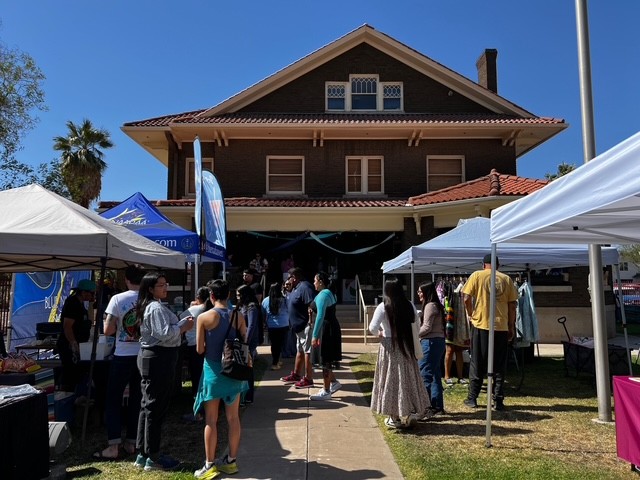
In the days after the video began circulating, a steady stream of new customers arrived at the modest restaurant at 2100 S. Sixth Ave. Many said they came specifically after seeing the post, transforming what is typically a quiet, casual eatery into a noticeably busier space. With limited indoor seating and only a handful of tables, the surge in traffic was immediate and hard to miss.
The surge lasted for several days and into the following week before gradually slowing. While traffic did not stay at peak levels, the exposure introduced the restaurant to new customers, some of whom returned after their initial visit.
Schapiro’s concept is simple, but the results can be significant.
In his video, titled “Finding Empty Restaurants, Then Bringing 100 Hungry People,” he documents the process of identifying restaurants that are not getting enough traffic and then creating a surge of customers in a single moment.
For small businesses, that kind of exposure can create a dramatic shift in visibility almost instantly.
Research shows the influence of social media on restaurants is both rapid and quantifiable. Reporting from Toast, a restaurant point-of-sale technology company, highlights how TikTok and Instagram have become key drivers of restaurant foot traffic. A 2025 survey by Toast found that 42% of diners discover new restaurants through social media, while 40% say influencer content directly shapes their dining decisions.
Consulting firm Deloitte has similarly reported that restaurants can see revenue increases of nearly 10 percent when leveraging social media strategies.
In effect, a single viral post can generate the kind of immediate customer influx that traditional advertising rarely achieves.
Coverage of viral restaurant trends points to a predictable cycle: a sharp spike in traffic during the first week, sometimes doubling or tripling normal volume, followed by a steady decline as online interest fades.

That volatility presents a challenge. Viral exposure can fill tables overnight, but it does not guarantee sustained growth. Restaurants are left to capitalize on a narrow window of heightened visibility, where long-term success depends less on the viral moment itself and more on what happens after it.
At Funland, the surge brought excitement, but also a test. The restaurant had to quickly adapt to higher demand while maintaining the quality and experience that would keep customers coming back.
For Funland, the challenge was turning that spike into repeat business, since viral attention alone does not guarantee long-term growth.
The restaurant leaned into the moment, adding a new menu item, the “Steven Schapiro Burrito,” and encouraging people to come try it with a slogan, “You saw the video… now it’s your turn.”
Chez Peachy, a Tucson bakery founded by Christa Lebron, has grown from a small home-based operation into a full storefront as demand increased through social media exposure.
What began as Lebron baking out of her apartment and promoting her creations online has turned into a business with more than 350,000 followers across platforms and a steady stream of customers.
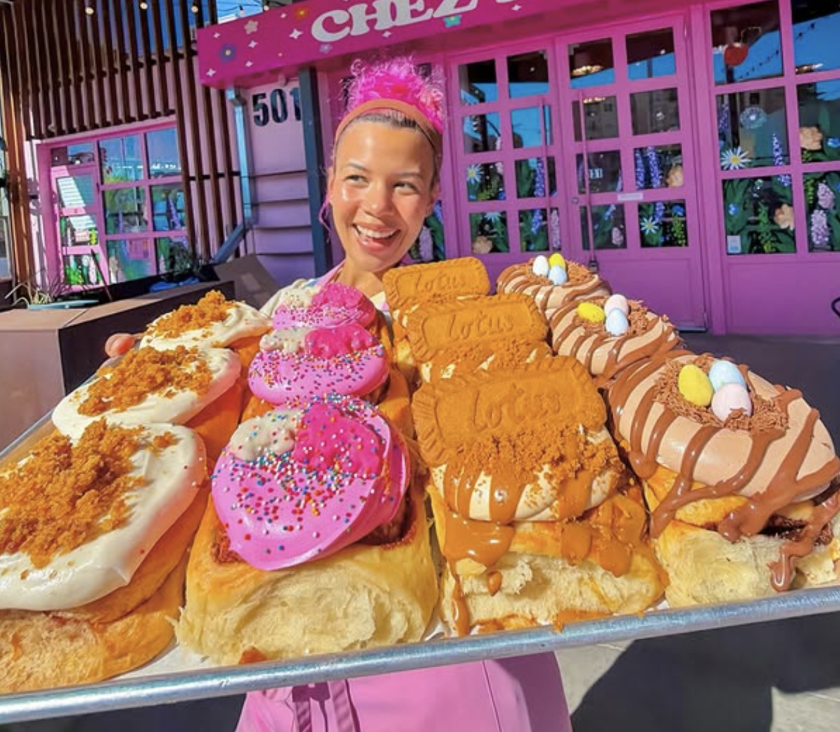
Located at 501 N. Sixth Ave. near the University of Arizona, Chez Peachy is known for its visually distinctive desserts, including bento cakes, decorated sugar cookies and its popular matcha drinks, all designed with a bright, pastel aesthetic that translates well to social media.
Before gaining a large following, the bakery operated on a smaller scale with limited daily orders. Social media helped expand its reach, though demand still increases sharply during viral moments including last July when “Love Island” contestant Hannah Fields dropped in.
Fields, a U of A student, visited Chez Peachy in search of what she called Tucson’s best matcha. It was one of several shops Fields posted on her Instagram, where she has 924,000 followers.
After the post, the bakery saw a surge in demand for its strawberry matcha, which recorded its highest weekly sales
In the days after the visit, customers came in specifically asking for the strawberry matcha, showing how quickly influencer exposure can drive short-term demand.
“People don’t want the traditional cakes anymore,” Lebron said. “People want to be a part of something they’ve seen online.”
Lebron said her focus has always been on creating an experience people want to return to.
Arizona Sonoran News is a news service of the University of Arizona School of Journalism.