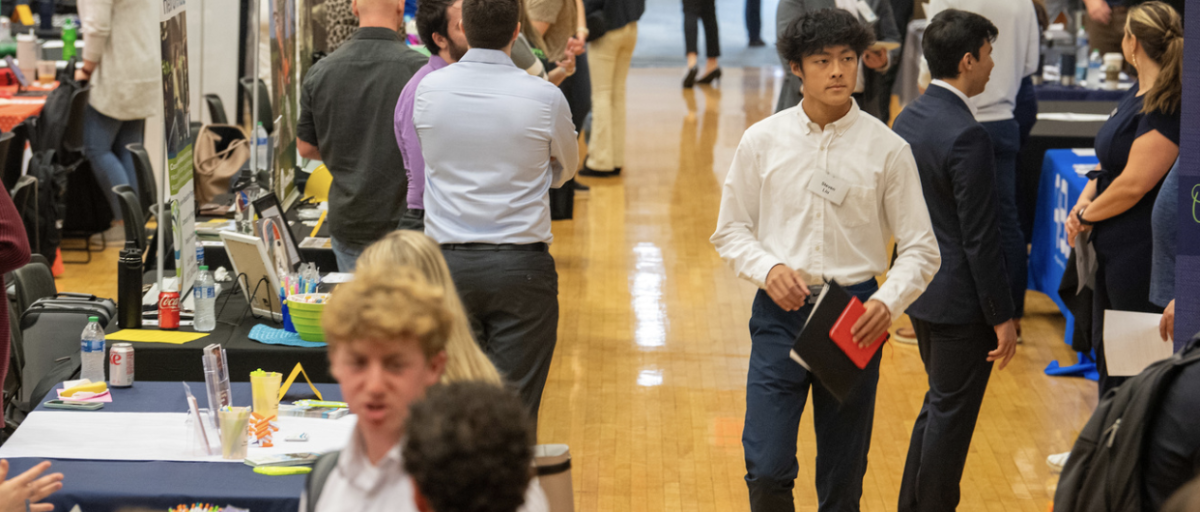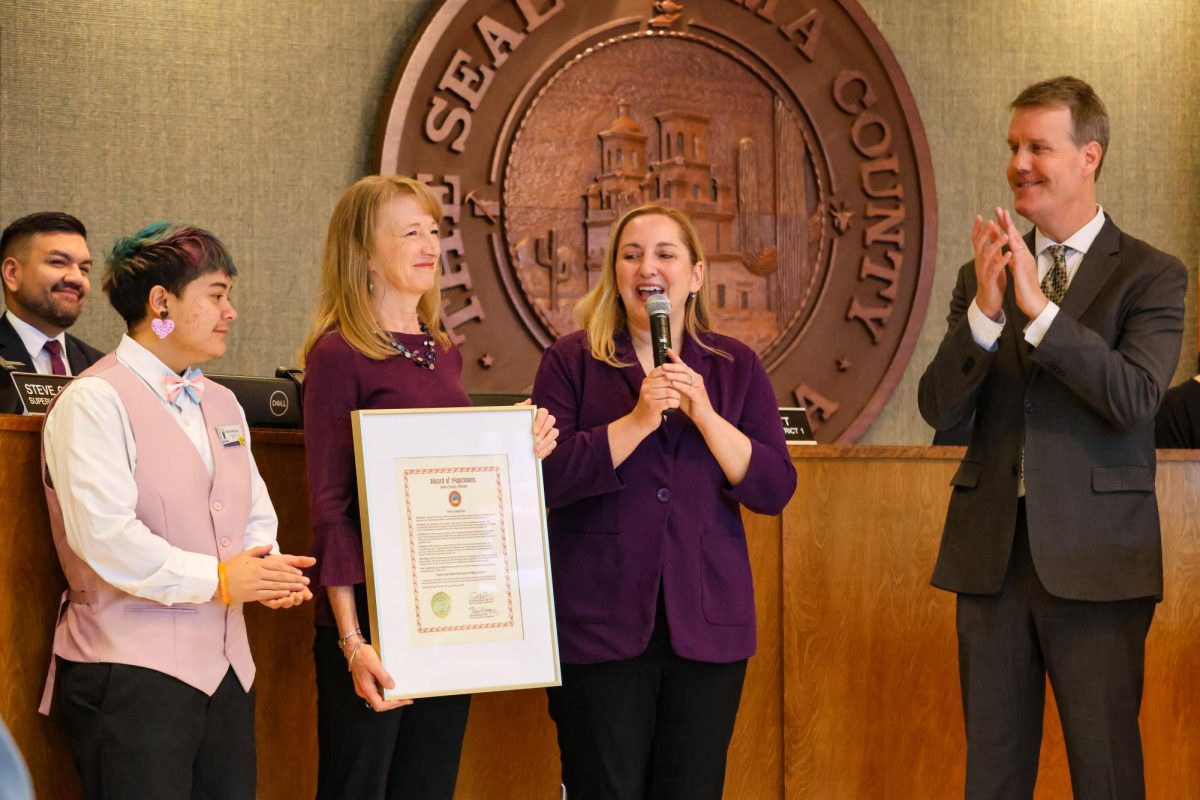


Five judges with clipboards surrounded a student-made exhibit depicting the story of Eusebio Francisco Kino, also known as “Father Kino,” at a 51st annual National History Day competition at the Arizona History Museum in Tucson, on Feb. 28.
Jude Huether, a junior at Salpointe Catholic High School, assembled an original diorama representing Kino’s diverse skills and lasting influence in the Pimería Alta region of southern Arizona and northern Sonora, Mexico.
“There’s so many elements of his influence in all the things that I frequent. I volunteer at Mission Garden, and there’s a whole garden that’s dedicated to the Spanish influence that he had,” said Huether.
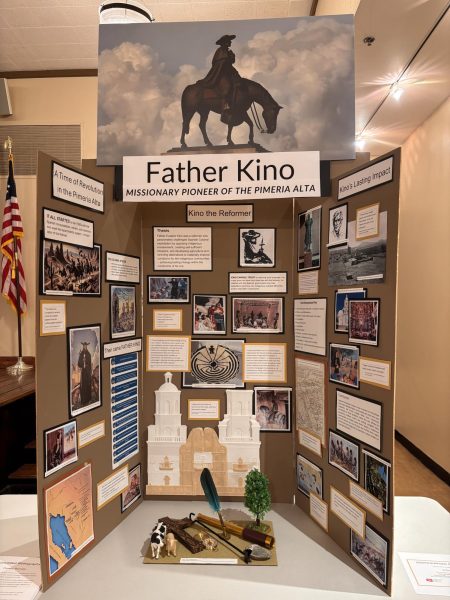
Jude Huether’s trifold exhibit features the story of Father Eusebio Kino at the Arizona History Museum on Feb. 28, 2026.
National History Day competitions, like the one in Tucson, help students transform their historical research into creative storytelling through exhibits, documentaries, primary sources and performances.
Through historical research and building connections to the contest theme, “Revolution, Reaction, Reform in History” in 2026, students learn how history shapes the present.
The event, open to middle and high school students across the US and around the world, helps students develop skills such as communication and historical thinking, said Leonard Moody, the event coordinator in Arizona.
“At our first regional competition, we had 118 students there,” he said.
He organizes and schedules the competition day, coordinating with teachers to bring students together to present their projects.
To compete, students dive into historical moments by conducting extensive research in museums, archives and libraries.
About 500,000 students and tens of thousands of teachers participate each year.
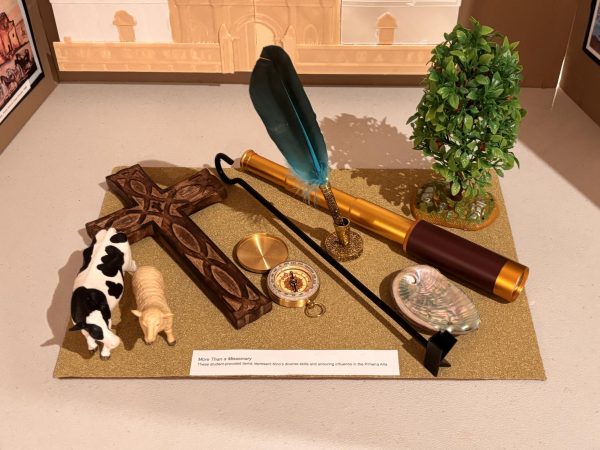
A diorama of items representing Father Kino’s skills and influence in the Pimería Alta at the Arizona History Museum on Feb. 28, 2026.
“The big thing we’re looking for is historical accuracy and how well they’re presenting the argument they’re representing,” said Jace Dostal, a judge and collections manager for Arizona Historical Society.
Students are also assessed on the use of primary versus secondary sources and how they defend the argument they are making, Dostal said.
“I really like the creativeness of all of it, then seeing the passion when we do the actual interviews with them,” he said. “Some of the students were so excited to tell us about what they learned because they’ve been spending a year doing this.”
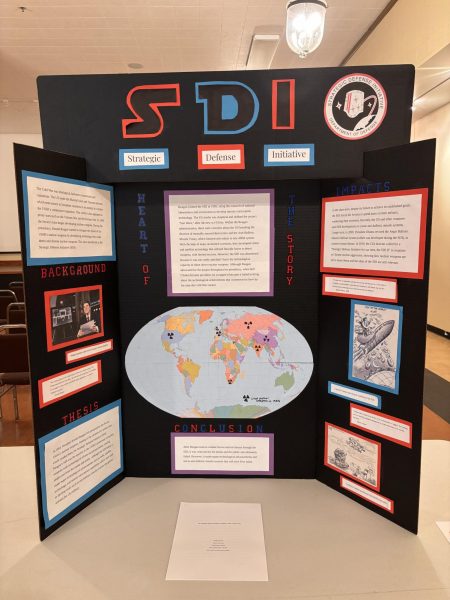
An exhibit portraying the Strategic Defense Initiative, created by Nathan Rosas, at the Arizona History Museum on Feb. 28, 2026.
“The ones that I’ve really liked the most so far have been ones that came out of the primary sources,” added Alyssa Wood, a master’s student at University of Arizona and a judge for the event. “Mainly what I’m looking for is to see that people are defining revolution.”
This year marks the 51st year of National History Day since its debut in 1974.
“It’s created such a culture over a certain amount of time. It’s created reliability and really has such a great impact on schools in the nation and the nation’s next generation,” Moody said.
Programs like this one foster college and career readiness in students, empowering successful citizens while preparing them for greater challenges.
“Fifty years is a long time, and it takes a lot of benefits to be able to have a program last that long,” he said.
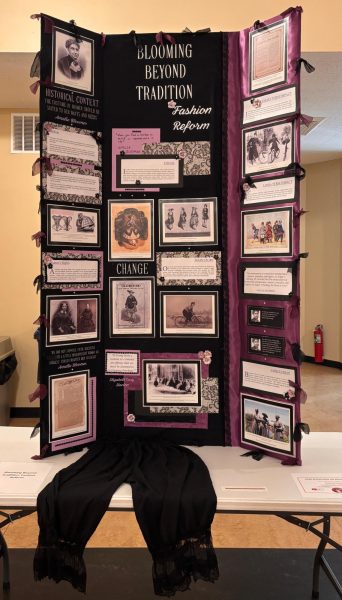
An exhibit representing a reform on women’s clothing, created by Arianna Musci, at the Arizona History Museum on Feb. 28, 2026.
Arizona is holding its statewide contest in April at South Mountain Community College, Phoenix to select which students advance to the national contest at the University of Maryland, College Park, where students will compete over several days of judging.
In 2024, 40 Arizona students advanced, and 34 attended in 2025.
The awards ceremony will be held on June 18, at the Xfinity Center at the University of Maryland, College Park.
Arizona Sonoran News is a news service of the University of Arizona School of Journalism.