


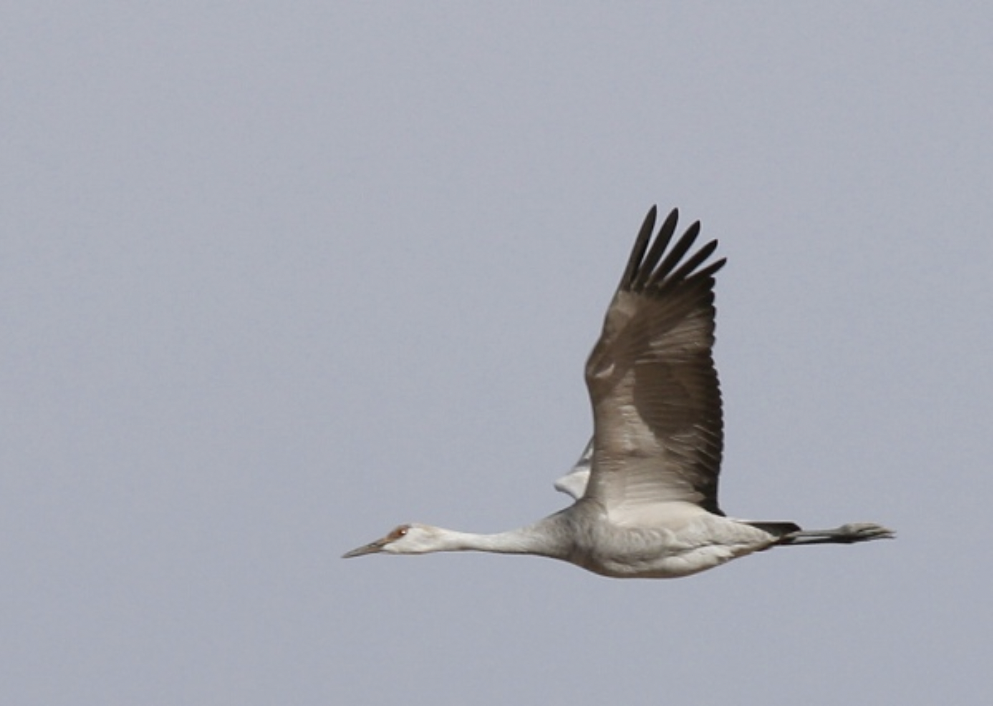
Every winter, thousands of birds funnel into the open grasslands outside Willcox, turning the area into one of the Southwest’s most biologically rich wintering grounds.
The Wings Over Willcox Birding & Nature Festival, now a fixture in Cochise County, celebrates that spectacle, which ornithologist and festival speaker Steven Shunk says is unlike anywhere else in the country. The festival takes place every January in Willcox.
Shunk, who has guided birding trips across North America, said what sets the festival apart is how deeply it’s supported by the Willcox community.
“It’s a well-organized, community-supported bird festival,” he said. “These events are often volunteer coordinated, but they still need funding. The local support here is a big part of why this festival succeeds.”
From a biological standpoint, southeastern Arizona sits at the northern ecological reach of the Sierra Madre Occidental, a massive mountain range stretching from Mexico into Arizona. Its isolated “Sky Island” mountains pull tropical and subtropical species farther north than they appear anywhere else in the U.S.
“If you want to see certain birds in the U.S., you have to go to southeastern Arizona,” Shunk said. “It’s not just migration. The year-round diversity is incredibly high because organisms from the Sierra Madre extend into that region and no further.”
While the mountains hold some of the rarest species, the festival centers on the open habitats near the Willcox Playa, where winter visitors put on the most dramatic shows. Tens of thousands of sandhill cranes arrive from the northern U.S., Canada and even the Arctic. Their morning liftoffs and evening returns remain the festival’s biggest draw.
Snow geese add another spectacle as they descend in large, bright flocks and raptor watchers look for the ferruginous hawk, one of North America’s largest hawks.

Shunk said this part of Arizona also boasts unusually high winter sparrow diversity, often with well over a dozen species present. “They aren’t always fancy-looking birds, but they’re attractive for birders, and this region has especially high sparrow diversity,” he said.
His presentation at this year’s festival focuses on woodpeckers, a group Arizona is known for despite its desert reputation. The state has one of the highest woodpecker diversities in North America, including both desert species and birds tied to oak woodlands. The Arizona woodpecker, found in only a limited part of the U.S., is a highlight for many birders.
Other notable species that appear in the region include the Mexican Jay and Bendire’s Thrasher, both connected to the Sky Island and Sierra Madre ecosystems.
Shunk said the festival is especially welcoming to newcomers and first-time birders, noting that even attending for a single day can offer a memorable introduction to the region’s wildlife.
“There’s a lot to experience,” he said.
The 33rd annual Wings Over Willcox Birding & Nature Festival will be held Jan. 15-18, 2026, on Martin Luther King Jr. weekend. The event features guided field trips, free seminars, a nature expo and a banquet with a keynote speaker, along with opportunities to see sandhill cranes, raptors, sparrows and dozens of other wintering species. The festival is based in Willcox, about an hour and 15 minutes east of Tucson along I-10. More information is available at wingsoverwillcox.com.
Arizona Sonoran News is a news service of the University of Arizona School of Journalism.