

In mid May, oil prices are on the way up once again.
Data from Trading Economics shows prices between $101 and $106 per barrel on the WTI and Brent Benchmarks, which reflect prices for oil futures trading. The rising oil prices are also causing gas prices to rise.
Those rising gas prices are forcing people across the U.S. to rethink their daily routines and summer plans.

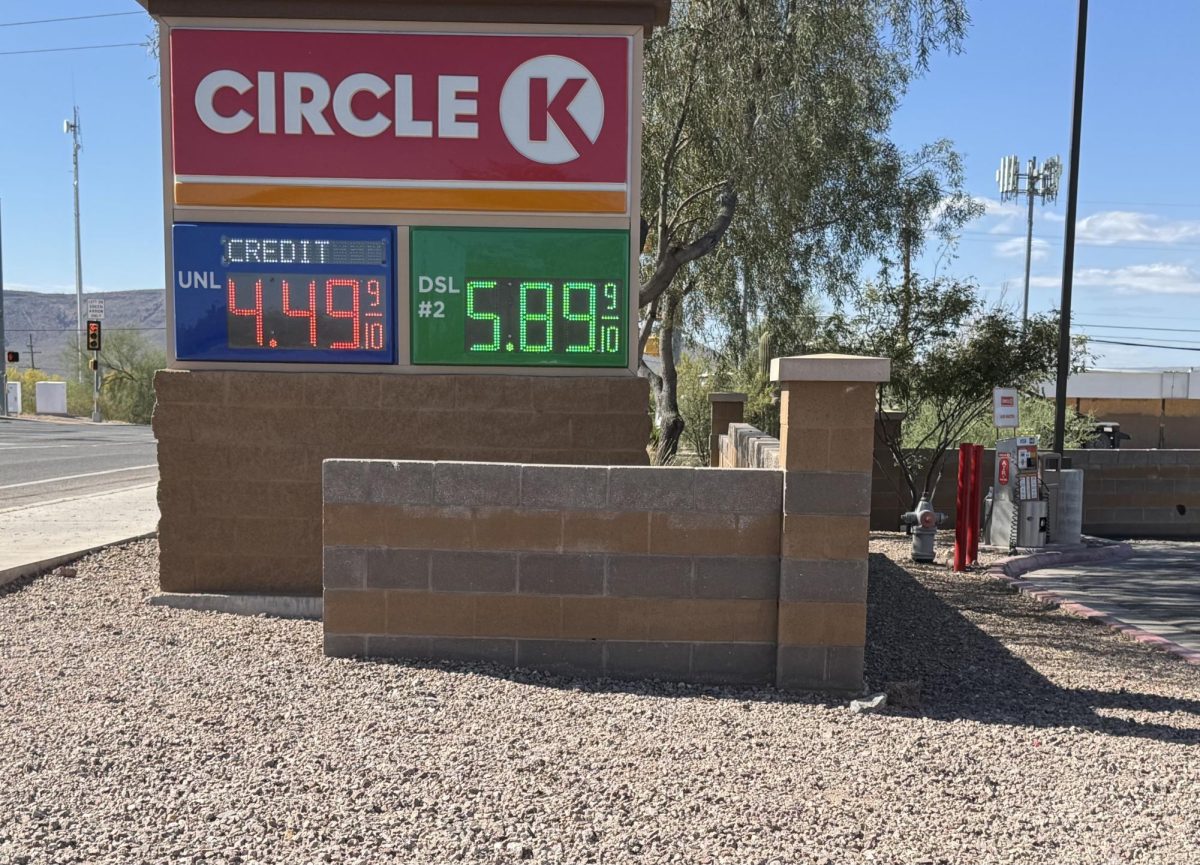
On a recent Tuesday, Tucsonan Jason Miller filled his Jeep Cherokee with regular unleaded at $4.49 per gallon at a Circle K on Valencia Road.
“The major change I’ve done in my summer travel plans was cancel them just because I can’t afford the extra gas right now,” he said.
Miller, a maintenance worker, said he is looking for other ways to get around the city.
“I’ve looked at bus schedules. I’ve even looked at checking out prices of bicycles, regular and electric,” he said.
According to AAA Arizona spokesperson Julian Paredes, there are several things you can do to help save fuel when driving.
“Probably the best thing people can be doing right now to maximize their fuel economy in their car, so yeah, changing your driving habits, like slowing down,” Paredes said.
He said that Arizonans drive pretty fast, and the faster you drive the faster you burn fuel.
“Making sure your tires are properly inflated, flat tires are definitely going to hurt your fuel economy,” Paredes said..
Proper maintenance is one of the most important things you can do to keep your fuel consumption low, including oil changes, and getting a proper tuneup on your vehicle.
“If you are going on a road trip, generally southern Arizona is a better place to fill up than Phoenix,” he said.
As of May 12, AAA says prices in Tucson are averaging around $4.72
a gallon, statewide it’s $4.82 and in Maricopa County $4.89.
On April 19. U.S. Secretary of Energy Chris Wright said on CNN that he doesn’t know when prices will drop below $3 per gallon.
“It could happen later this year, that might not happen until next year,” he said.
But in an interview with The Hill, President Trump said that Wright was wrong and that gas prices will fall quickly once the Iran conflict is over.
“We’re not going to be in a normal oil market for quite a while,.” said Derek Le Moine, a professor of economics at the University of Arizona Eller Business School.
Even if oil prices fall, it will be a slow decline, he said.
“The big thing the U.S. could do, which I don’t know that necessarily should do, would be to ban our exports of oil,” he said.
He added that banning exports would increase access, but not all refineries are built to process American oil.
Many are designed to process heavier crude from the Middle East and Venezuela.
In the meantime, many Tucsonans are feeling the squeeze. And some, like Pierce Brokenshire, are changing their daily commutes.

“I had an electric bike that was just a haha toy, and then I’ve started actually just riding it everyday to school. Because I was spending $20 to $30 a week just gas, just sitting in traffic and making it back and forth to school,” he said.
Brokenshire, an Eller Business School student, said like many Arizonans, he is also going to fewer places while dealing with rising prices.
“Honestly, just not going at all. I stay mostly central now because of gas prices.”
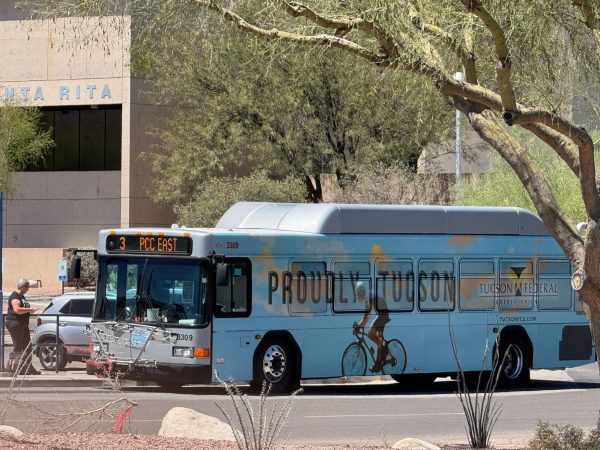
Suntran bus at Pima Community College West campus, waiting for passengers to continue on to Pima Community College East Campus on April 24. The Suntran buses provide an alternative form of transportation within the City of Tucson.
With gas prices rising, alternate transportation such as taking a SunTran bus or SunLink streetcar in Tucson can help save money as the fares are currently suspended since COVID-19. Carpooling can also be an option to help save fuel cost.
Arizona Sonoran News is a news service of the University of Arizona School of Journalism.