
Tucson set a record high of 102 degrees on March 21 according to the National Weather Service. With summer approaching and heat rising, temperatures are affecting both people and wildlife, including birds.
Bird behaviors such as breeding, reproduction and access to food in Southern Arizona can be impacted by rising temperatures and changing monsoons patterns, researchers say.
“A bad monsoon year without a lot of rain means a decrease in bird presence,” said Emily Burns, program director for the Northern Sky Island region at Sky Island Alliance.
“Monsoon patterns play an important role in the ecosystem, and data from Sky Island Alliance showed a decline in quail species during drought years,” she said.
Less rainfall also affects how species interact within the environment, especially food sources, she said.
“Water is life, and without water there are no plants growing, meaning no production of seeds, affecting future generations of plants,” she said.
When plants dry out due to less rainfall, insect populations decline, leaving birds with fewer food sources, she said.
Researchers have observed these impacts across Southern Arizona.
Changing bird behaviors
Eamon Harrity, wildlife program manager at Sky Island Alliance, said he also noticed species such as the Stellar’s Jay, which usually reside high in the mountains, moving down to lower elevations.
“Due to the late onset of the rains. There are fewer resources up in the mountains, so those birds are actually coming down into the foothills around Tucson looking for opportunities to find food and water, and that’s not normal,” he said.
These changes in bird movements also affect when birds breed and nesting season, when birds lay eggs and reproduce.
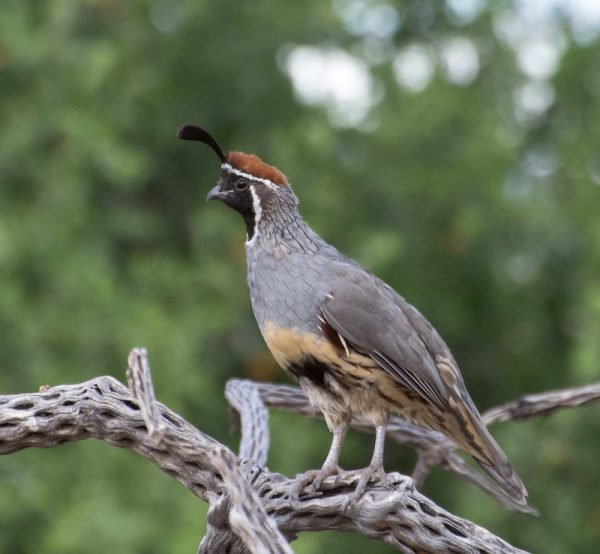
Gambel’s quail
Early observations suggest that some birds, like Bob-white quail and Japanese quail, may delay or skip nesting during the drought season, said Alexis Rickert, a master’s student at the University of Arizona who studies Gambel’s quail species in Southeastern Arizona.
“Gambel’s quail depend on the winter rain that feeds into their vegetation or productivity during the spring season, where they feed on insects and green vegetation to feed their chicks,” she said.
Breeding season for gambel’s quail is usually March through July, but longer drought disrupts their cycle.
“They will suppress their reproductive hormone in periods of drought to increase their chances of surviving to the next year,” she said. “They essentially just wait to try again the next year, where hopefully they have enough rain and enough resources to raise their young successfully.”
Changes in breeding behavior directly impact the bird population.
“Following the dry winter season during our second year of observations, we saw much less reproductive success,” she said.
Rainfall plays a major role in the overall population size.
While adult populations tend to remain stable, chick survival was more sensitive to lower rainfall, she said.
Fewer chicks surviving into the next season can impact the entire ecosystem.
“Food webs are all connected. When one population declines, say, of a prey species, or a species that provides food for other animals, those effects move through the system,” Harrity said.
Birds matter in Southern AZ
Researchers say these changes are not just affecting ecosystems, but bird populations on a much larger scale.
Cameron Tescher, a bird researcher at the University of Arizona, says bird populations are experiencing a sharp decline globally. Much of that can be tied to changes in climate.
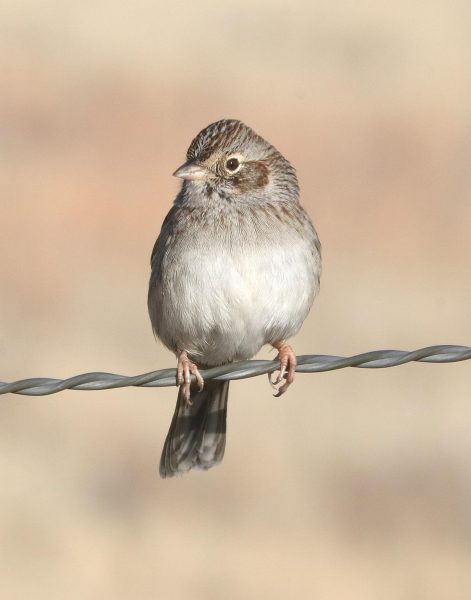
Cassin’s Sparrow
“There have actually been 3 billion fewer birds from 1970 to 2020. With climate trends, some species will be lost without conservation efforts,” he said.
He said that these changes can lead to less ecotourism in Arizona and affect the local economy.
“I mean, people will travel from all around the country, and even the world, to see these birds out in Arizona,” he said. “There are impacts, whether it is economically or culturally.”
Moving ahead, rising temperatures have raised concerns about the unpredictability of summer conditions.
“I expect it’ll be a hot summer and animals and plants and birds will have to adapt or have to struggle to make it through the summer months,” Harrity said.
Arizona Sonoran News is a news service of the University of Arizona School of Journalism.