

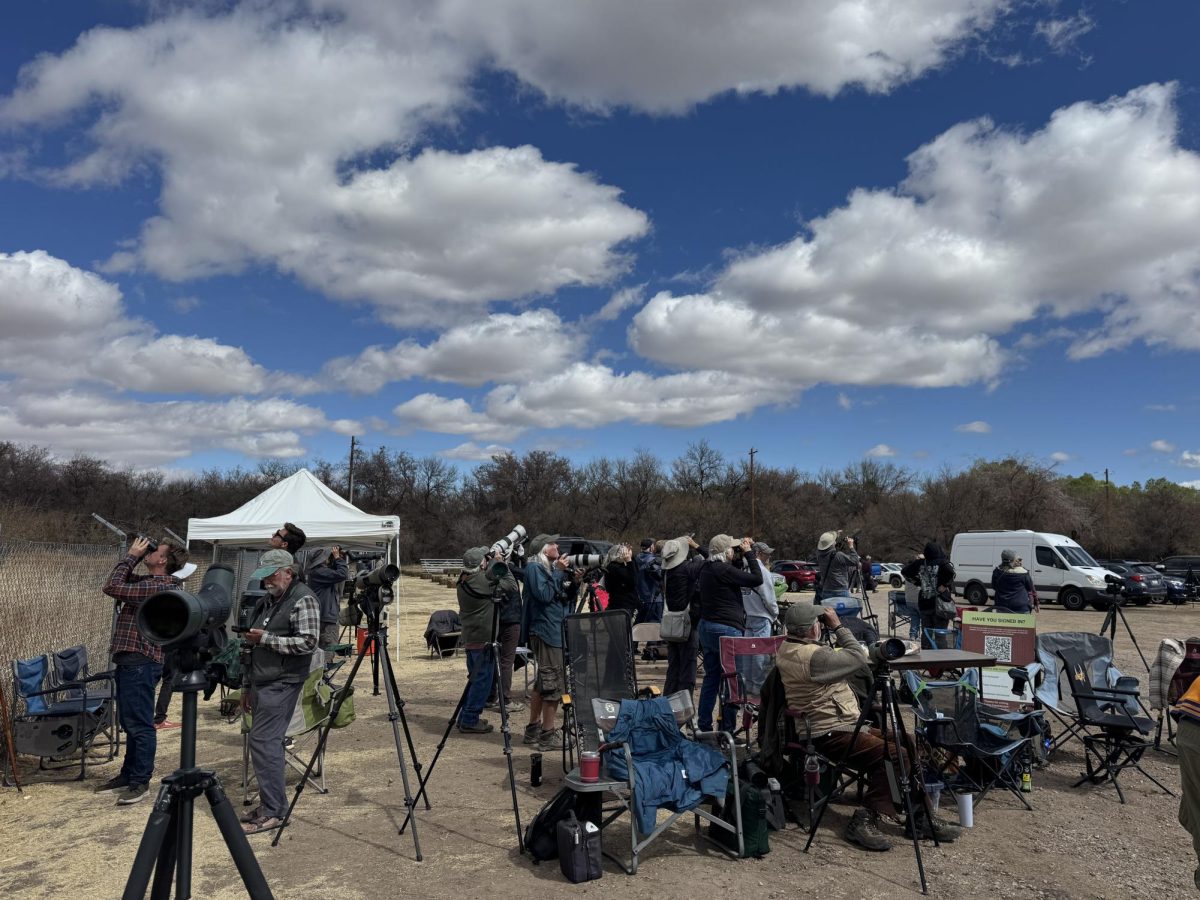
At the Tubac Hawkwatch Festival attendees can watch raptors and other birds migrate over Ron Morris Park while learning about them from experts.
The festival runs from March 13-17 and is hosted by the Tubac Nature Center in collaboration with Hawkwatch International and the Tucson Bird Alliance.
Last year there was a 900 person show out with birdwatchers from over 35 states and five countries, and organizers expect an even bigger turn out this year.
Starting on March 13, attendees can test and purchase binoculars and visit with local environmental nonprofits while watching birds soar overhead.
And visitors of all ages are invited to enjoy “family day” on Saturday, March 16, where there will be a nature scavenger hunt, owl pellet dissections, hawk journal making, bird watching and more set up for young birdwatchers at the Tubac Community Center.
“When those kids were in it last year, it was almost like the building was happy. You could just feel the vibe. It was just so wonderful,” Jan Espe said, a volunteer who helped out during last year’s family day.
History
Hawkwatch started in 2006 when a group of Tubac retirees noticed five blackhawks flying north one morning while they were having their morning coffee, said Peter Collins, founder and coordinator of Hawkwatch.
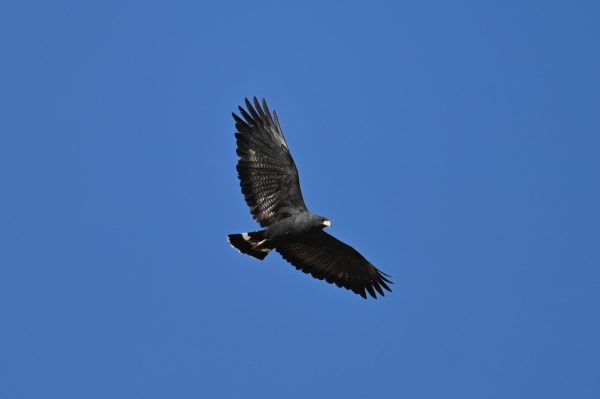
“It was an uncommon sighting to see five blackhawks going north, so that got everybody in the birding community interested in what was going on,” he said about the black-and-grey-feathered medium sized hawk.
The number of blackhawks in this region is not well known, Collins said, so it spurred his interest in studying their migration.
An avid bird watcher for more than 30 years, he launched a hawk-watching event at Ron Morris Park in 2013.
When the Tubac Nature Center was created in 2019, it began sponsoring Collins’ project and organized the first Hawkwatch festival in 2021 to educate visitors and build the birding community.
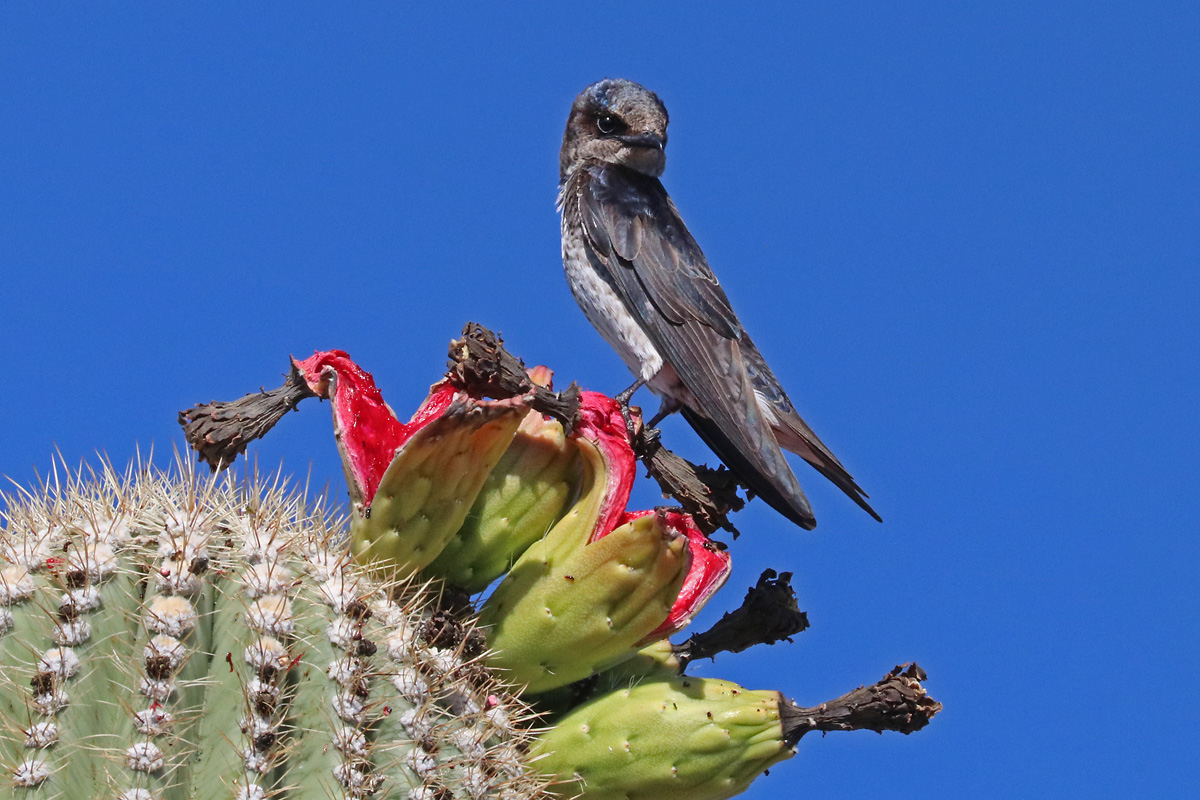
Blackhawks are the most common type of raptor seen at Hawkwatch. They mainly live in Mexico and Central America but migrate along the Santa Cruz River in Arizona, said Michael Dunn, Tubac Nature Center president. Turkey vultures, swainson’s hawks and red-tailed hawks are also commonly sighted.
“They’re looking at those green trees as an air-state highway,” he said of the swath of cottonwood trees growing along the Santa Cruz River.
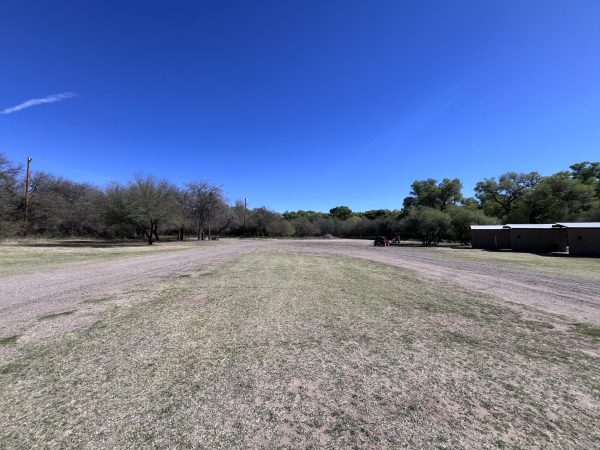
“The river is very important, both to people and to wildlife,” added Seth Ausubel, vice president of the Tubac Nature Center. “And really, the reason why we have a hawk watch here is because of that river and those cottonwood trees.”
The nature center is working with the Santa Cruz River National Wildlife Refuge to protect and maintain the cottonwood trees birds use to sleep and feed, he said.
Hawkwatch International
The Tubac Hawkwatch Festival is held in collaboration with the nonprofit Hawkwatch International, which works with the nature center and the Tucson Bird Alliance to count raptors. The group is focused on monitoring and protecting raptors, primarily in the west, including Nevada, Wyoming, Arizona, Texas, New Mexico and parts of Alaska.
“This site, in particular, has I think such a unique community around it,” said Melissa Marshall with Hawkwatch International, who is in Tubac for the second year. “It just feels very supported and beloved by the town.”
The group will be counting raptors in Tubac from Feb. 15 through the end of April.
In Tubac, migrating birds follow the river, unlike other locations where birds use thermals and the wind to catch a ride and coast, Marshall said.
“It’s amazing how many visitors we get every single day, just people checking on us,” added Nate Cooley, a Hawkwatch International migration counter in Tubac for the first time this year. “They fully embrace it here. It’s really cool.”
While there are fewer birds in Tubac than in some other areas, Cooley said he prefers the slower paced, more indepth monitoring of birds.
“Here, every single bird has to be kind of re-approached and studied,” he said. “It’s way more fun to kind of consistently check everywhere.”
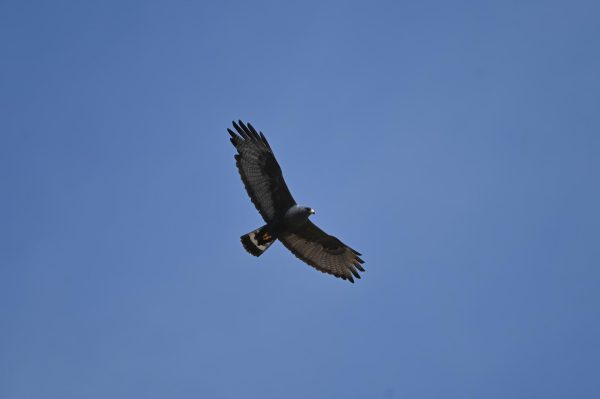
At some sites, birds fly in flocks of one kind and are counted with clickers. In Tubac, the majority of birds are seen alone, so birdwatchers constantly monitor the sky for birds with their binoculars, then identify them as they see them. To ensure they do not count the same bird twice, they note each bird’s characteristics, such as missing wing feathers.
Hawkwatch Festival 2026
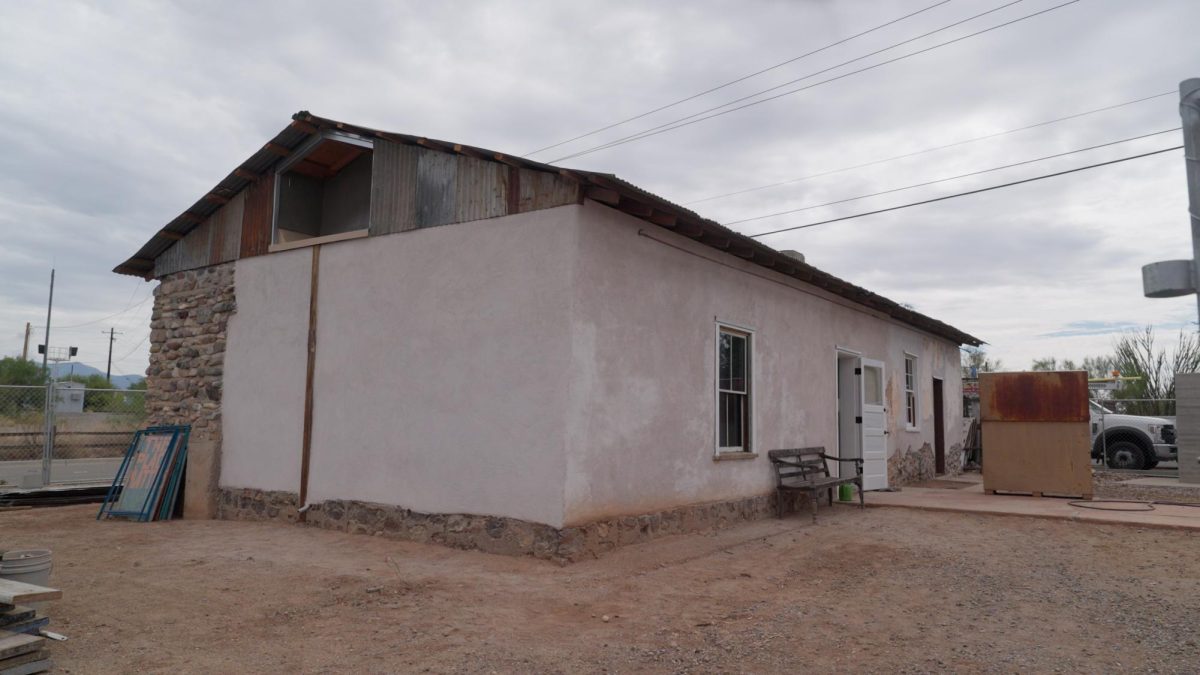
The Tubac Hawkwatch Festival runs from March 13-17 at Ron Morris Park on 31 Calle Iglesia.
Each day offers a bird walk at 8 a.m. and 11 a.m. Friday, March 13 will include visits from environmental nonprofits. And Saturday, March 14 is family day with events, including a scavenger hunt, owl pellet dissections and live raptor presentations. For a full list of events visit tubacnaturecenter.org
Arizona Sonoran News is a news service of the University of Arizona School of Journalism.