


During the City of Tucson’s mayor and council study session on Jan. 21, city officials questioned Director of Transportation and Mobility (DTM) Sam Credio about the soon-to-be-expired Regional Transportation Authority program and why the department is urging Pima County residents to vote to renew the RTA Next Plan.
RTA Next will appear on the March 10 ballot as Proposition 418, accompanied by a funding investment, Proposition 419.
RTA Next is a $2.67 billion investment plan that relies on a half-cent sales tax, the same funding source used for the original 2006 RTA plan.
The plan will “support reduced congestion, improved mobility, enhanced and expanded transit, environmental protections, bicycle and pedestrian improvements and pavement rehabilitation,” according to the proposition.
If it doesn’t pass, city officials warned that public transportation could see reduced service.
Loose Ends
Four projects from the original RTA plan will be included in RTA Next.
These include two road widening projects on Houghton Road, from Broadway Boulevard to Tanque Verde Road, and 22nd Street from I-10 to Kino Parkway. Neither has started due to scope changes, Credio said.
The other two are a road reconstruction project on First Avenue from Grant Road to River Road and the continued road widening project onGrant Road from Fremont Avenue to Sparkman Boulevard, said Credio. These projects are expected to need additional funding, he said.
“It is our understanding that the commitment to fund transit was for 20 years, and also to deliver all the projects in the RTA plan,” Credio said.
That didn’t happen. Now voters will decide whether to continue funding them in March.
Miranda Schubert, Ward 6 council member, said the night before the meeting, when she was “cornered by a group of constituents” at her neighborhood association meeting. They were angry about RTA Next and called it a step backward.
“These are well-informed, credible individuals, too, who have held local elected office previously here in Tucson,” she said. ”By focusing exclusively on service classes and omitting discussion of backup strategies, shared responsibility for financial flexibility, we’re being asked to support RTA Next based on worst-case assumptions.”
Her constituents worry RTA Next will also fail to complete promised transportation improvements.
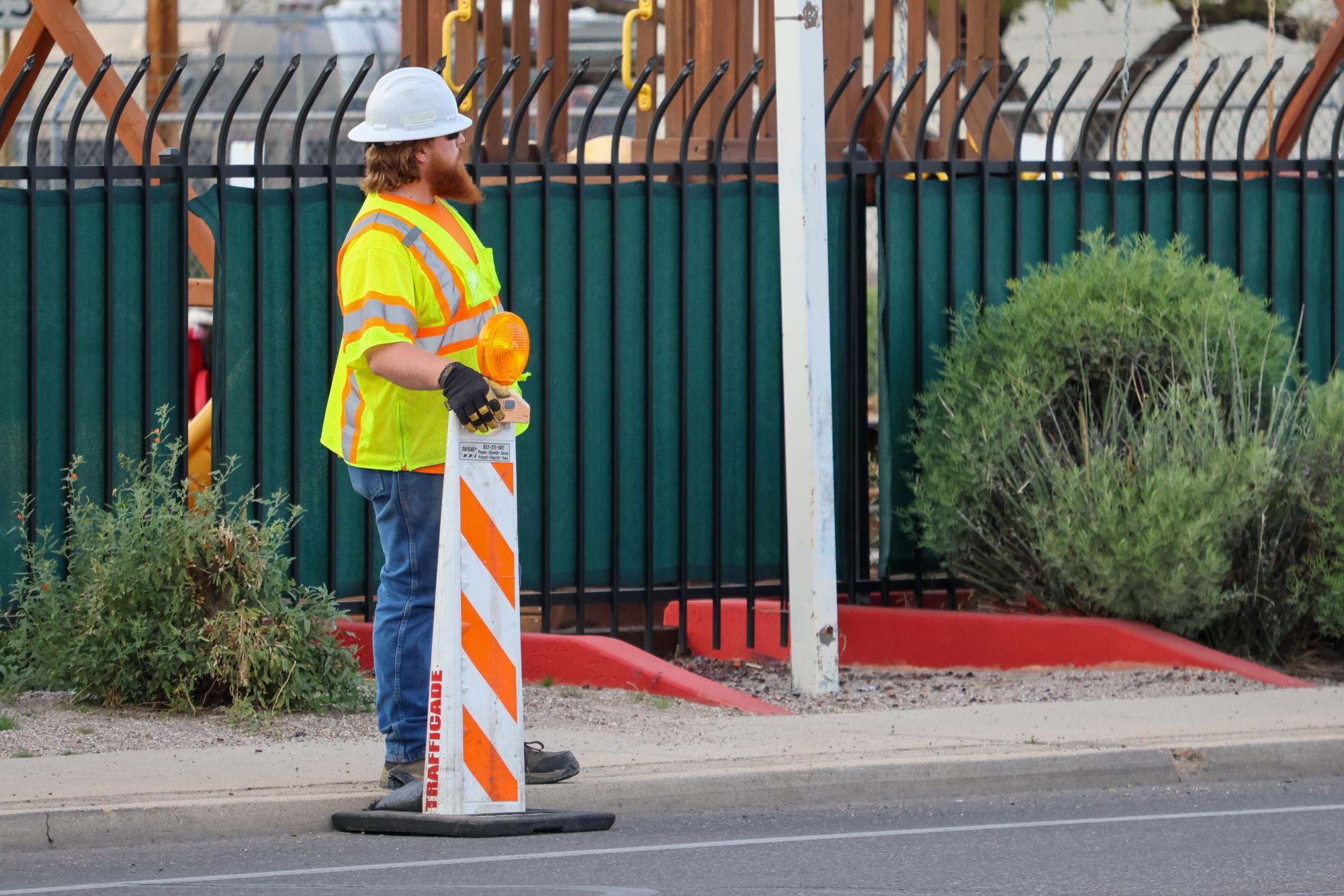
A construction worker prepares a portion of North Stone Avenue for roadwork in Tucson, Ariz., on Jan. 21, 2026. Road repairs are considered pavement rehabilitation, which RTA’s proposed budget allocates $177.6 million towards.
Potential Outcomes
Despite concerns about lingering projects, officials said that without an affirmative vote for renewal, projects would be halted as soon as funding for the previously approved plan runs out.
If RTA Next is not approved by voters, those projects “just would not happen,” Credio said.
Without the plan, Tucson transit would face a shortfall of at least $10 million that would result in reduced public transit.
RTA Next’s 20-year plan includes the following elements and allocations from the proposed $2.67 billion budget will be allocated to them.
- Roadway (multimodal) Corridor ($1.2 billion + $741 million in non-RTA funding)
- Arterial Reconstruction ($257 million + $237 million in non-RTA funding)
- Transit ($726 million + $228 million in non-RTA funding)
- Safety, ADA and Active Transportation ($254.6 million)
- Environmental ($50 million)
- Pavement Rehabilitation ($177.6 million)
Some officials worry about the potential impact of losing RTA funding on transit services if the proposition doesn’t pass.
Ward 5 Council Member Selina Barajas said she is “really concerned that the most vulnerable in our community will be the ones to be impacted if RTA Next doesn’t pass,” specifically those who may have barriers to voting.
The SunLink Streetcar, which became free to use during the COVID-19 pandemic, “was made possible with significant RTA funding,” she said. “I’m just not sure how we’ll continue to offer fare-free transit if RTA Next doesn’t pass.”
Mary DeCamp, a Tucson resident who often uses public transit, said Tucson and Pima County should not rely on federal or state funding alone.
“We need to look to ourselves for solutions,” she said after the study session.
Overall, RTA regional funding sources with RTA sales tax revenues from fiscal year 2025 totaled $126 million, compared to $33 million from state sources and $21 million from federal sources. RTA accounted for the largest share of transportation investment in Pima County.
Will Things Be Different?
“We’ve learned from the last 20 years,” Credio said. “We started to build in some check-ins and make sure that there are some opportunities to identify if there are red flags,” and how to address them.
While some constituents doubt that RTA Next will fully complete its plan this time around, Credio said he hopes the effort will continue beyond the next two decades.
“I actually hope it doesn’t end,” he said. “So this is the next 20-year plan, then hopefully there’s another 20-year plan beyond that, and we’re continually investing in our transportation needs long-term.”
Tucson Mayor Regina Romero said she believes it is important for the City of Tucson to invest in itself.
“I furiously believe that investing in ourselves is the only route to moving forward,” she said. “We cannot rely on the federal government to save us.”
RTA Next and the original RTA plan are both state-established taxing districts within Pima County, meaning investment in RTA is an investment in Pima County, she said.
Community discussion about alternatives to reliance on RTA funding have not yet resulted in direct action or a “credible plan that cooks the plant,” she said. But added that she “would love to” support an alternative in the future.
On March 10, the decision of whether to move forward with the next 20-year transportation plan will be in the hands of Pima County residents.
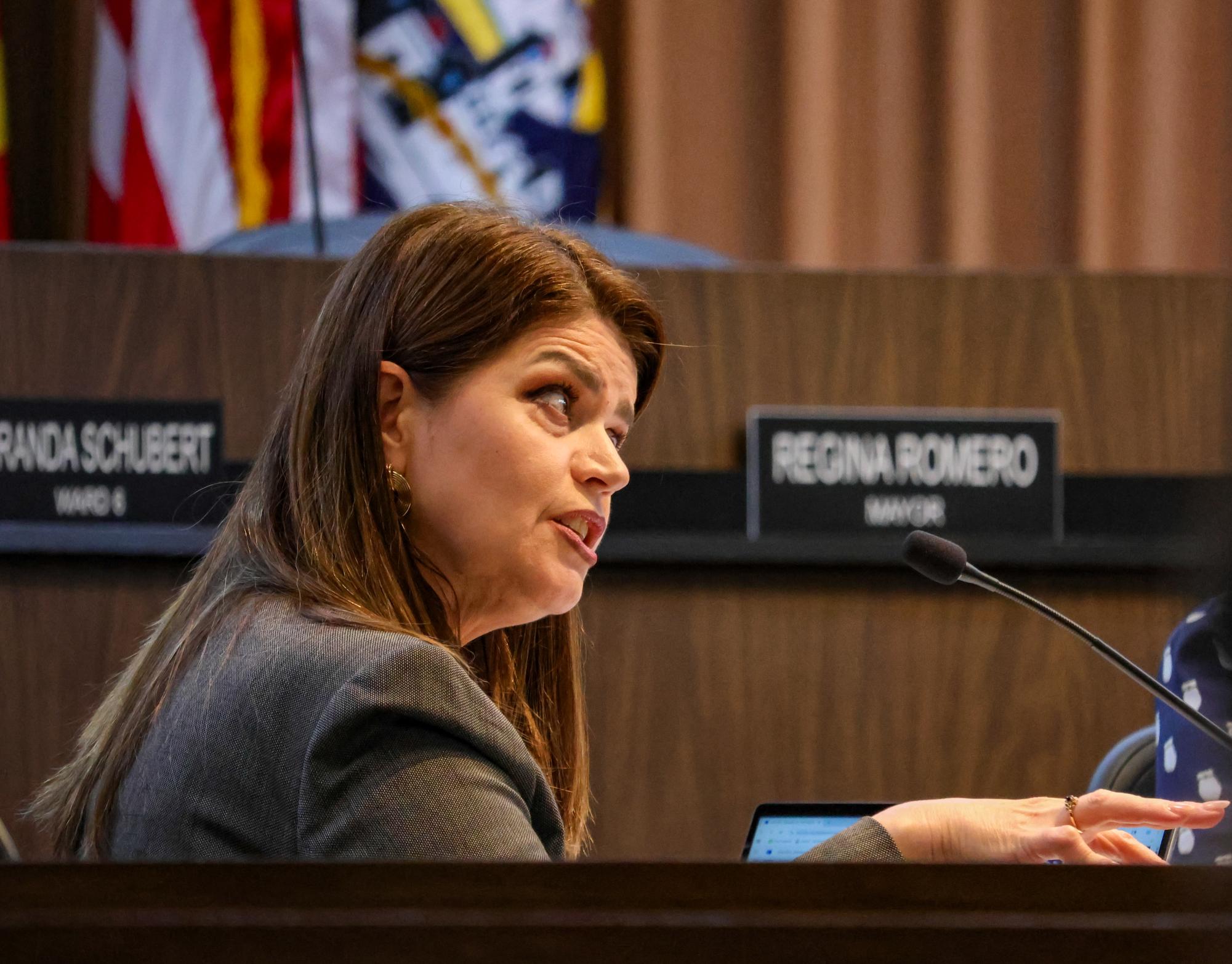
Mayor Regina Romero questions Director of Transportation and Mobility Sam Credio about RTA’s proposed plan at a council meeting on Jan. 21, 2026. The plan, RTA Next, will be on Pima County ballots on March 10, 2026.