


Thousands of college students are expected to travel to Cabo San Lucas, Mexico, for spring break in the coming weeks, according to local student travel companies, despite a U.S. State Department safety alert issued March 2 amid cartel violence that left more than 70 people dead across the country last month.
Arizona’s three state universities begin spring break next week. Pima Community College and Tucson Unified School District begin their breaks the following week, sending a wave of Tucson-area travelers toward Mexican resort towns during back-to-back weeks.
Among these heading out are University of Arizona sophomores Cailynn Cooper and Arhysa Gamboa, both of whom booked trips to Cabo through LVIN Life, a travel company that organizes spring break trips for students from more than 150 colleges and universities nationwide.
THE FEBRUARY VIOLENCE
On Feb. 22, Mexican Armed Forces killed Nemesio Ruben Oseguera Cervantes, known as “El Mencho,” the leader of the Jalisco New Generation Cartel, also known as the CJNG.
Cervantes was killed as part of the Mexican government’s crackdown on cartels in Tapalpa, Jalisco, that was supported by the United States, according to published reports.
Cervantes died while being transported to Mexico City.
In the hours that followed, suspected cartel members erected roadblocks across Mexico using hijacked and burning vehicles, according to reports. More than 70 people died and Jalisco’s governor declared a Code Red emergency out of Puerto Vallarta and Guadalajara.
The U.S. Embassy issued an alert urging citizens in five Mexican states to shelter in place.
“It definitely made me think twice,” Gamboa said. “I talked to people going, people who have family in Mexico, my mom –– and kind of just got everyone’s opinions and kept up with the news. Since Cabo is far away from Puerto Vallarta and everything that happened, a lot of people didn’t think there was a safety issue, so I got a little concerned but decided it should be fine.”
CABO SAN LUCAS AND THE JALISCO VIOLENCE
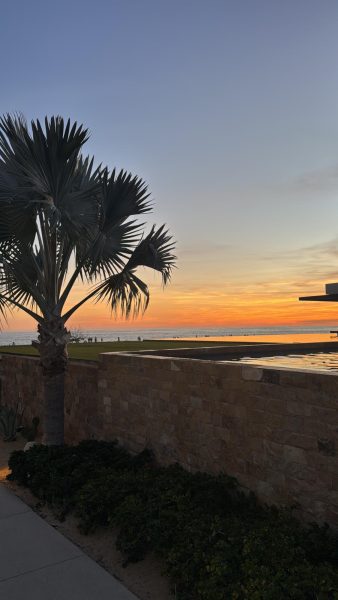
Cabo San Lucas is located at the southern tip of Baja California Sur, a peninsula separated from mainland Mexico by the Sea of Cortex. Puerto Vallarta, where much of the February violence was concentrated, is approximately 1,000 miles from Cabo San Lucas by air. The Feb. 23 U.S. Embassy alert did not mention Baja California Sur, and no disruptions were reported on the Baja peninsula.
As of early March, the U.S. State Department advisory for Baja California Sur remains at Level two: “Exercise Increased Caution” –– the same level assigned to France, Germany and Italy. Jalisco is at a level three recommending that travelers reconsider their plans
“The main source of violence is about 20 to 24 hours away, and the safety of Cabo has stayed the same before what happened in Puerto Vallarta and after,” Cooper said.
Gamboa said she researched the advisory levels before deciding to proceed with her trip.
“Cabo’s been a level two for a while now,” she said. “I know they increased Puerto Vallarta to a level three, but since Cabo hasn’t gone up, we’re not too concerned.”
FAMILY REACTIONS AND TRAVEL PLANS
Both students said family members expressed concern after the February violence. Cooper said her mother called after the news and noted the flights were refundable. After discussing the distance of the violence from Cabo and the unchanged advisory level, both agreed the trip would go forward.
Gamboa said her father initially was concerned but changed his position after researching the hotel’s security set up for them through the travel company they are traveling with.
“They left it up to me to make the decision,” Gamboa said. “I feel like they wouldn’t do that unless they believed it was okay, too.”
Both students noted that a close friend’s father is also traveling to Cabo the same week.
Cooper said booking through a company factored into her comfort level.
“If it was going to be a serious danger, the company wouldn’t want the liability on themselves,” she said.
LVIN Life provides on-site staff, security personnel at hotels and venues, and a 24/7 support line. The company did not respond to a request for comment.
WHAT TRAVELERS SHOULD KNOW
The State Department’s spring break alert focused on risks common during peak tourist season, including petty crime near nightlife areas, unregulated alcohol and counterfeit prescription pills containing fentanyl at some local pharmacies. The Embassy recommended joining the Smart Traveler Enrollment Program at step.state.gov, using vetted transportation and remaining aware of surroundings.
Los Cabos officials launched a security operation ahead of the spring break season, stationing armed patrols at the Marina, downtown Cabo San Lucas and Medano Beach, and deploying K-9 units in tourist zones according to a statement from local security director Cota Marquez.
Health officials note several risks specific to the area:
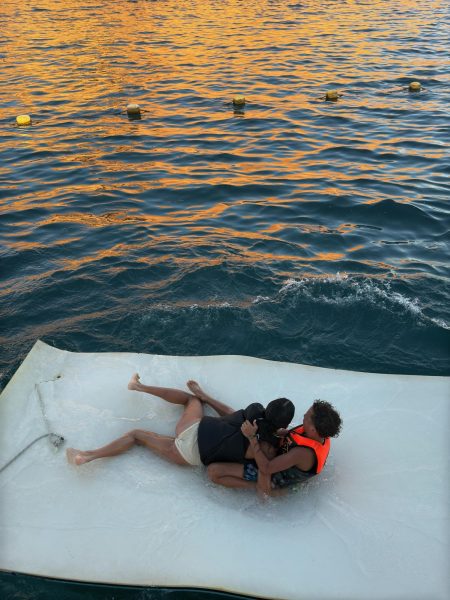
* Pacific-side beaches carry strong undertows –– travelers should swim only at protected beaches including Medano Beach, Chileno Bay and Santa Maria Bay.
* Tap water is not safe to drink.
* Private hospitals typically require payment at the time of service regardless of U.S. insurance.
* Travel insurance with medical evacuation coverage is recommended.
LOOKING AHEAD
El Mencho’s death could trigger internal power struggles within the CJNG in the coming months, according to InSight Crime, an organization that tracks organized crime in Latin America.
For students still weighing their plans, Cooper said the decision comes down to personal judgment.
“Go with your gut,” she said. “If you or your parents are feeling a little iffy about it, then go with that. Just take precautions –– whatever you think is best for you and your family.”
Gamboa said she has the contingency if conditions change once she arrives.
“If it doesn’t seem the safest once we get there,” she said, “we’ll just stay in the resort.”
Arizona Sonoran News is a news service of the University of Arizona School of Journalism.