

“Take a thousand naked pictures of yourself now. You may currently think, ‘Oh, I’m too spooky.’ Or, ‘Nobody wants to see these tiny boobies.’ But, believe me, one day you will look at those photos with much kinder eyes and say, ‘Dear God, I was a beautiful thing!’” — Moira Rose, Schitt’s Creek, Season 2, Episode 9
Thanksgiving is still in the rear-view mirror, and the rest of the holidays are in the oncoming lane with their brights on. There are more gatherings down the pike. Yankee Candle scented conversations swerve all over the place until there’s nowhere left to go. One thing leads to another, photo albums come out. Camera rolls light up, and impromptu viewing parties collide, grisly reminders that everyone hates something about themselves, and nobody looks like they used to.
Portraits and selfies, while being photos that just about everyone embraces or has created, are also a prime vector for cringe. It’s important to understand what happens when people see themselves in photos, because the science behind it shows that how much control people feel they have over how they look and how others perceive them in photographs negatively distracts from other areas of their lives.
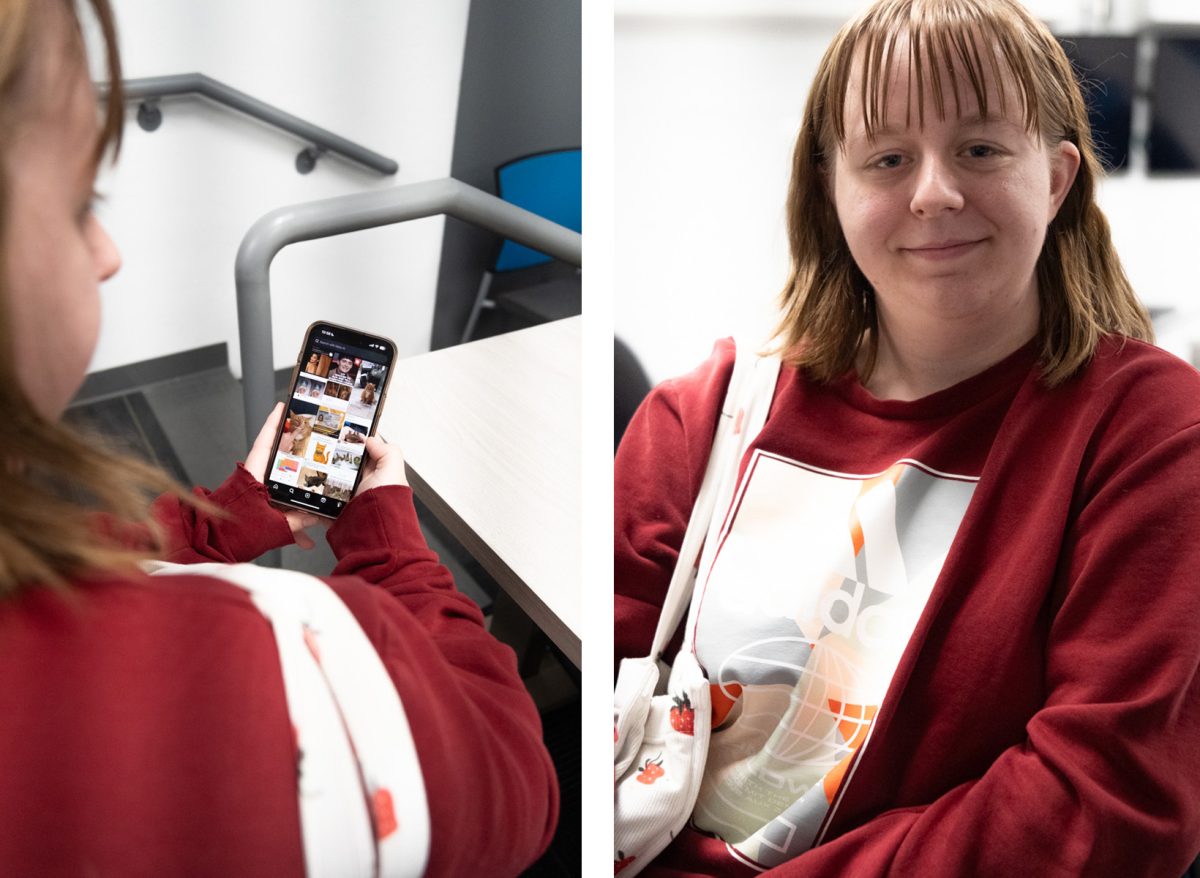
Rylee Erickson, 21, is a University of Arizona Pharmaceutical Sciences undergraduate. She keeps her Instagram account private. “I don’t want random people seeing it. I like to keep it for friends and family,” she said. When she sees images of herself on other people’s accounts, it’s awkward. “I lose that sense of control.” Tucson, Ariz. Wednesday, Dec. 3, 2025
And, while most people assume that the reason they don’t like photos of themselves is because of all the things they already perceive as being wrong about their appearance — weight, wrinkles, a bad haircut —, photographers and social scientists know that forces like optics, psychology, time and even business are also at work.
Justin Haugen, 42, a commercial photographer in Tucson, points out that even when someone likes what they see in the mirror, they are not seeing what the camera and others see.
“There is a disconnect from people seeing themselves in photos with how they view themselves, and it starts with your mirror and your phone,” said Haugen. “It’s opposite of how people actually see you, where you see your features on one side of your face, somebody views you opposite to that. So, you’re already at a disadvantage.”
Haugen understands that there is a lot of psychology involved in the images he makes of people. If he photographs someone he sees as being confident but they think of themselves as reserved, that comes across in the photos. However, there are ways to make that confidence come through.
“If I have someone take a deep breath and hold it, it fills their chest cavity. It shows confidence. If I have them present their jaw forward more, there’s a lot of little micro things that I can do to make somebody present differently on camera,” he said.
Another commercial photographer in Tucson, Steven Meckler, 69, believes that now that people have photographed themselves and their friends zillions of times with their smartphones, what makes for an acceptable portrait has changed.
Before cameras became an integral part of mobile phones, portraits were shot with standard or telephoto lenses. Standard lenses capture a scene with a perspective similar to how a person would see it. The narrower, compressed perspective of a telephoto lens is often considered more flattering and allows the photographer to isolate a subject against a blurred background.
“Your iPhone, when you hold it up, and you photograph you and maybe your friends standing real close to you, it’s a wide-angle lens,” Meckler said. “It’s around a 35 mm or thereabouts. In the old days, it wasn’t acceptable to use that wide a lens to do a portrait.”
For commercial photographers, there is the added dimension of working for a client who isn’t even in the picture. “So not only do I have the subject to take into consideration as far as who they are, what they like to project,” Meckler said. “Also, there’s the client involved, and what their needs are.”
There are other factors, too. For instance, it’s common for people to say they dislike how they look in photos, but after a few years, those same images are viewed through rosy retrospection. In other words, people tend to be kinder to their past selves in photos.
Why is that?
“I think anecdotally many, many people have that experience of feeling like if I only knew then that I was the youngest I was ever going to be, and just by being young, I had so much vitality,” said Jennifer Stevens Aubrey, 50, a University of Arizona Communications professor, whose research centers on the effects of the media on young people. “I think most people I know would agree that they’ve had an experience like that.”
Self-objectification
Stevens Aubrey’s office in the department of communication is a busy, but uncluttered space. The room is almost as narrow as the hallway leading to it. Her desk in the old red brick building barely separates a wall of windows with a view of another red brick building. Opposite the windows, there’s a wall of shelves with framed photographs and books of her and others’ research. On a cabinet behind her desk, a lobby card featuring Taylor Swift in a jewel-encrusted Versace bodysuit from the artist’s Eras Tour shares real estate with another card that references a popular online refrain: “Edward ruined it for mortal men.” The phrase alludes to a vampire in the Twilight films whose beauty and charm are unattainable for his human rivals.

Jennifer Stevens Aubrey studied women Taylor Swift fans and how that fandom affects sexual identity and acceptance. Stevens Aubrey, along with University of Arizona graduate Leah Dajches edited and contributed to the book, “Fandom in Marginalized Communities.” Tucson, Ariz. Tuesday, Nov. 25, 2025
Stevens Aubrey’s research has documented the emotional impact of the selfies that adolescents post online. Simply posting selfies doesn’t affect young people’s feelings about their appearance, she found. However, the mental effort put into manipulating the images does. “Being invested in your selfies and editing your selfies is strongly related to higher self-objectification,” said Stevens Aubrey. “Self-objectification occurs when a person sees themselves primarily as a third person would. It’s like a compilation of your different appearance features and body parts, etc.”
It’s detrimental because self-objectification overwhelms a person’s consciousness and occupies cognitive resources that would otherwise be devoted to one’s focus on important tasks. Consequently, a person is less likely to be able to fully concentrate on activities and problem-solving.
Ashley Carrillo, 40, is an assistant professor in the University of Arizona’s School of Nutritional Sciences and Wellness. She says that the disconnect between how people see themselves in photos and how they perceive themselves when they close their eyes and think of what they look like is proof that body image lives in the brain.
“If I’m feeling good about myself and I like the way I look, but I don’t like the way I look in pictures, it’s possible that other factors are influencing my perception,” Carrillo said. “I have all these societal and external factors that are influencing my perception because I thought at that moment that I would look the way society wants me to look.”

Ashley Carillo’s classes include students from varied fields such as nursing, public health and psychology. She says she loves the cross-section because, traditionally, the responsibility for who should be treating body image issues is often punted to the extent that it goes unaddressed. Tucson, Ariz. Wednesday, Dec 3, 2025
Body neutrality and embodiment
Stevens Aubrey feels the body positivity movement, which asserts that all bodies are beautiful regardless of shape, color and size, has been an encouraging trend on social media. “But at the end of the day, it’s still about what you look like,” she said.
Currently, she hopes to shift attention to other remedies for self-objectification. One of those is a messaging strategy called body neutrality, which “is encouraging others to turn our attention to how our body feels and how we feel and how our bodies function, and appreciating your body for doing those things,” she said. “So instead of it being about what your body looks like, it’s about what your body does for you.”
Her research on body neutrality has even resulted in a breakthrough. “I did a study where I was able to show that a media message decreased self-objectification and undid it,” she said.
Carrillo refers to people being able to shift their focus to how they feel physically as embodiment. She’s encouraged that the current generation of young people, who have grown up with a greater acceptance of mental health support, may be able to break the cycles of self-disparagement they have seen in their parents and older generations. She hopes that today’s young people will influence their communities, that they’ll be able to say, “I look very different than you look, but I don’t think there’s anything wrong with the way I look, and I’m okay,” she said. “I just think there is a wave of curiosity that might be enough to have a little bit of impact.”
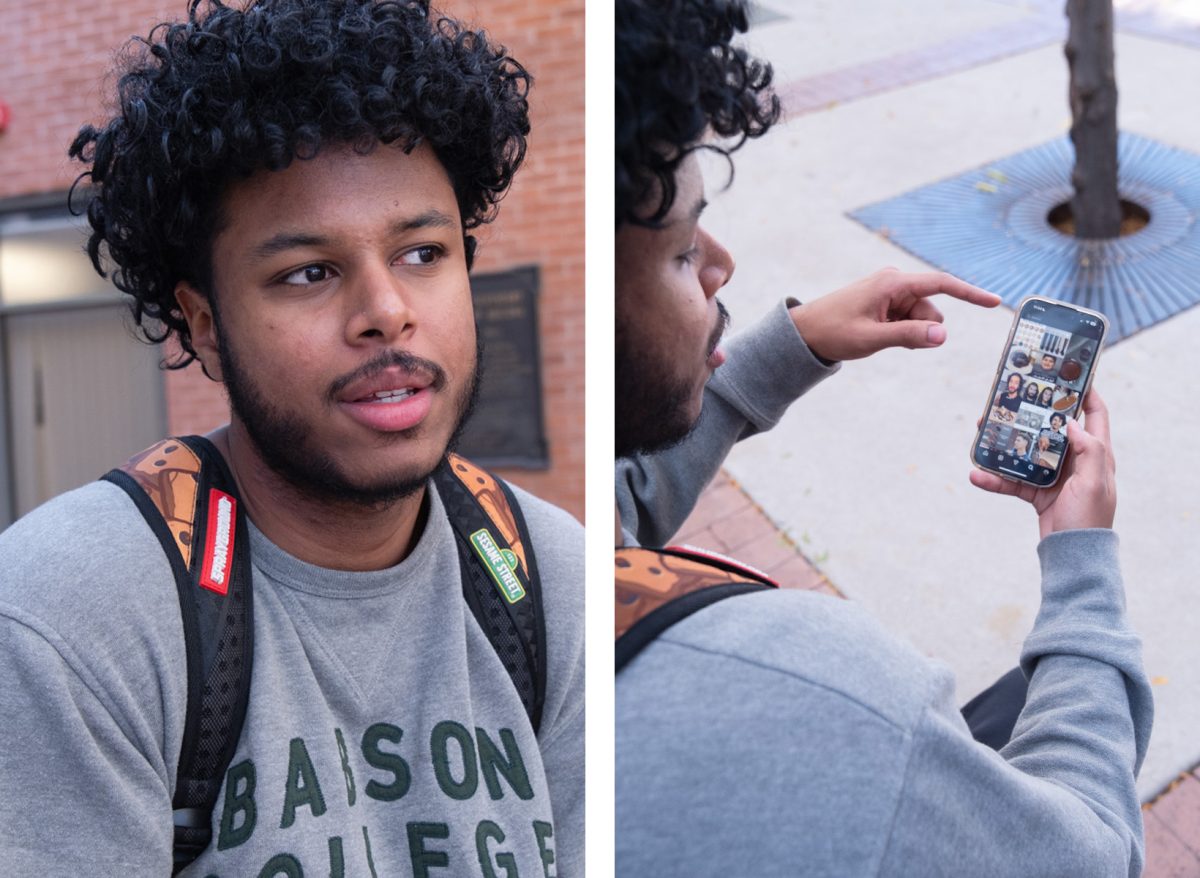
University of Arizona undergraduate Omar Al Shunaiman, 21, studies nutrition and dietetics. He maintains two Instagram accounts, a private one for friends and family, and a public one where he shares the nutrition, exercise and other health tips he’s learning. He’s not bothered when friends post photos of him on their public accounts. “Sometimes they post pictures that, oh, I have seen better ones. But to be honest, I don’t really care,” he said. Tucson, Ariz. Wednesday, Dec. 3, 2025
Technology and time
There are now myriad ways for anyone to easily manipulate photos using filters and software.
The technology that renders the illusion of smooth, glassy skin from which no pimple’s fleshy chroma or a furrowed brow’s cruel shadow can escape may prove to do more harm to users than the jolts to the ego it provides. Popular filters like FaceApp add another option for self-objectification in selfies. Instead of people comparing themselves to others, filter users end up comparing who they are with an idealized, impossible version of themselves.
Stevens Aubrey believes the use of filters on selfies likely has negative outcomes. “It’s a dangerous sign for me,” she said. “My general sense, based on the research, is that filters, especially when they’re used to make you more idealized, are going to have kind of a negative impact on how you feel about your appearance.”
And because people are aware of the pocketable digital magic available to them in their day-to-day life, they often expect it out of the box in all their pictures. Meanwhile, photographers must manage expectations to create flattering yet honest images.
During portrait sessions, Meckler is often asked by subjects to Photoshop them to look a certain way. “And I’ve come up with a pat answer for everybody,” he said. “I tell them I make everyone look like they had a great night’s sleep,”
Haugen encourages people to think about tomorrow’s photos today as if today were tomorrow.
“I like to remind people that every picture of you is a photo when you were younger,” he said. “You’re going to be mad ten years from now that you didn’t take a picture ten years ago.”
Arizona Sonoran News is a news service of the University of Arizona School of Journalism.