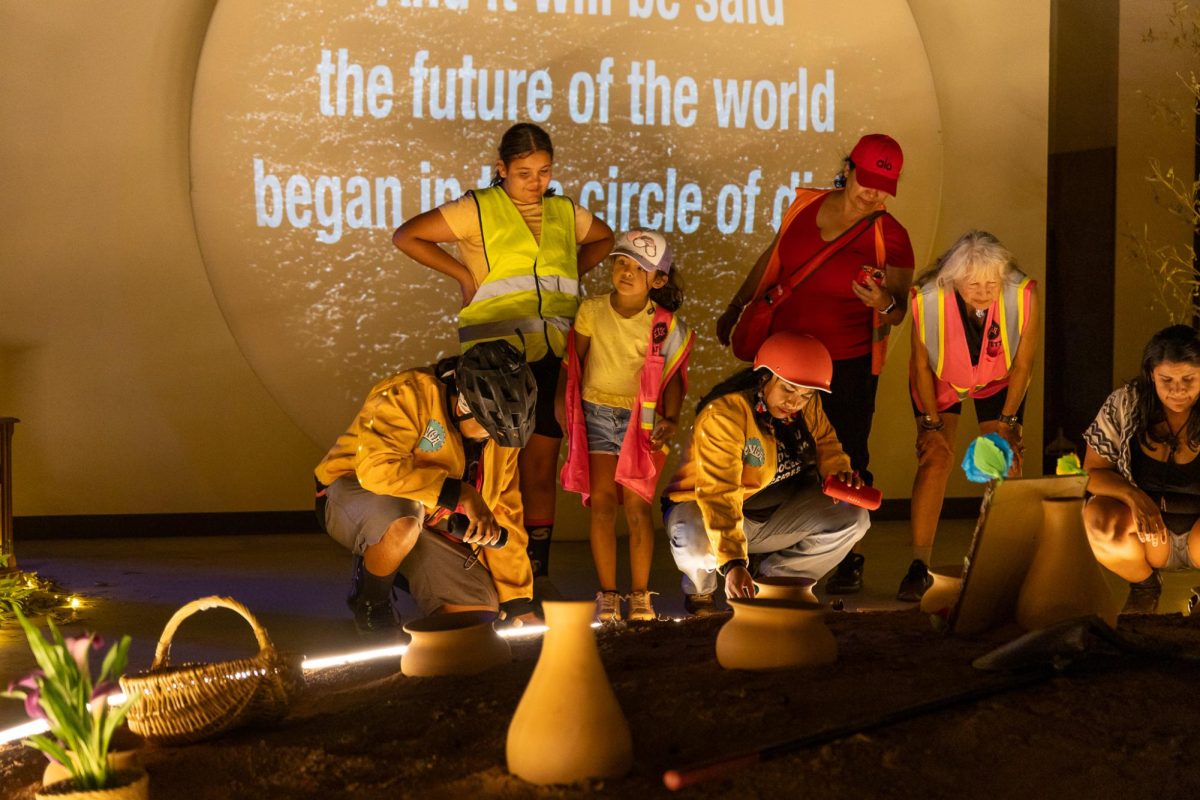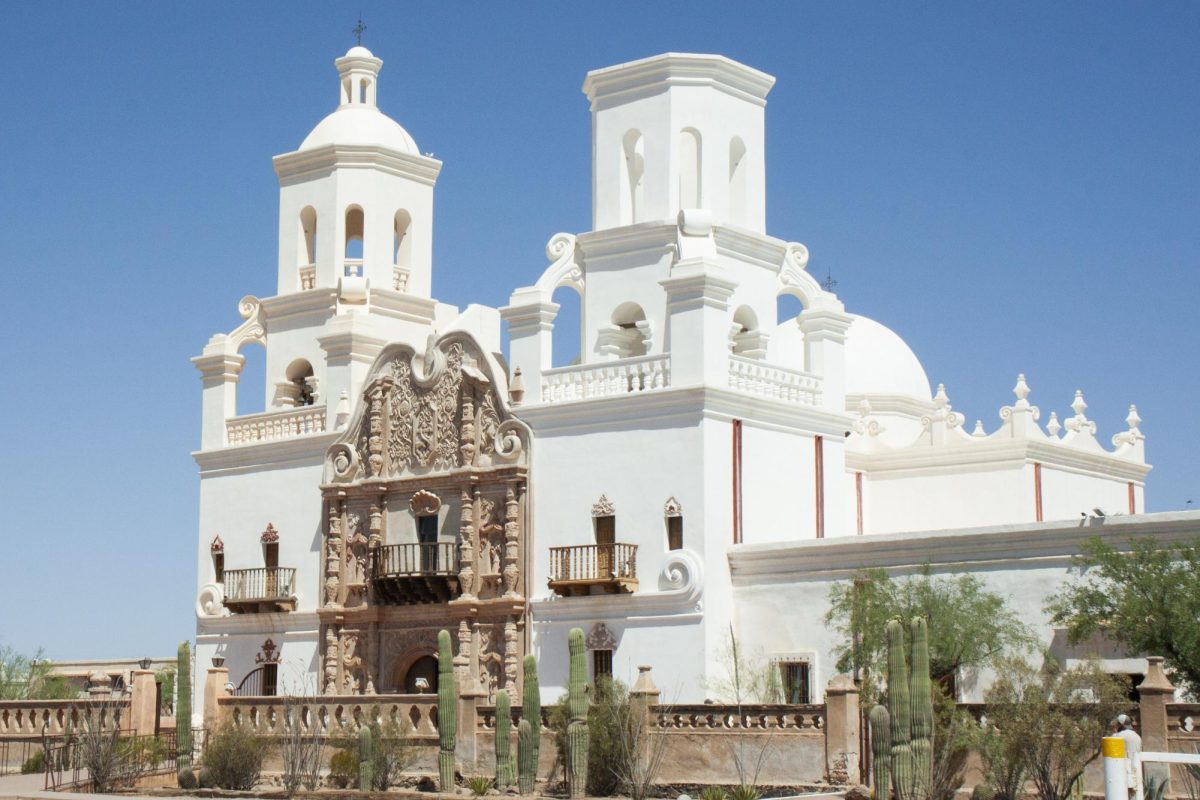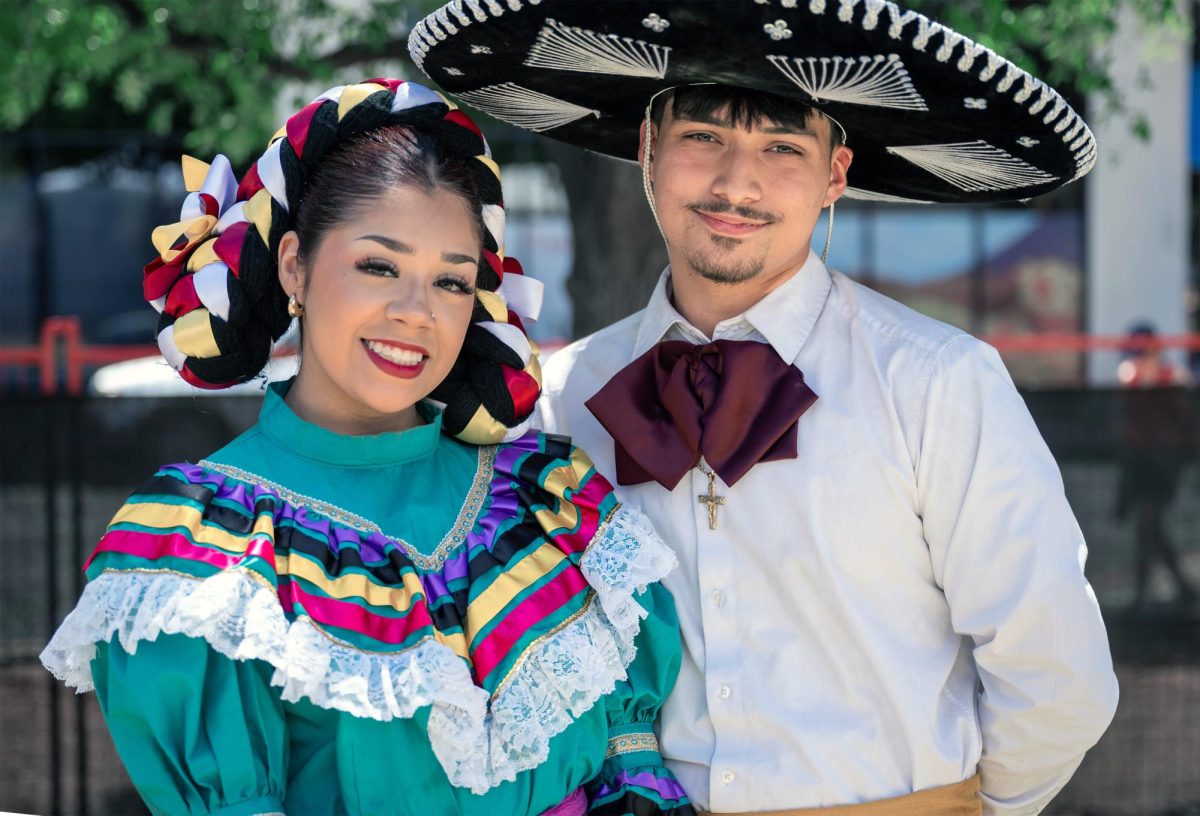



Artists and visitors from both sides of the border will fill downtown Douglas and Agua Prieta On Nov. 7 and 8 for the 10th annual Binational Art Walk, a celebration of color, sound and community that has become one of the region’s most beloved events.
What began as a small art show inside a coffee shop on G Avenue has grown into a two-day cross-border festival where music, murals and performances take over the streets, reminding both cities that the fence between them isn’t the whole story.
“We wanted to show that our communities are so interconnected,” said Jenea Sánchez, co-executive director of the Border Arts Corridor and one of the event’s founders. “The focus isn’t on the politics of the border, but on the deep cultural ties that already exist.”
Sánchez and her husband, former Douglas Mayor Robert Uribe, owned a coffee shop on G Avenue when the first art walk took shape in 2015. After hosting small art shows and open mics at their shop, they decided to expand. Dozens of people, some from across the border, came together to organize, and the event naturally took on a binational focus.
That same year, the team collaborated with Post Commodity, an Indigenous artist collective known for installations that challenge perceptions of the border.
“After that first year, we never stopped,” Sánchez said. “The art walk has taken many forms, from parks to streets to collaborations with other festivals, but the heart of it has always been connection.”
Since then, the Border Arts Corridor has evolved into a nonprofit that not only runs the art walk but also manages the historic Grand Theater in downtown Douglas. Built in 1919, the theater sat closed for decades until the organization took over in 2018.
This year’s art walk will feature exhibits in the newly renovated lobby, the first time in more than 60 years that community members can walk inside.
“It’s emotional for people who grew up here,” Sánchez said. “Some remember going to movies there as kids. Now they’ll walk in and see art on the walls again.”
Across the border, co-executive director Martina Rendón oversees the Agua Prieta side of the event, where stages and installations come alive near the public library, just steps from the port of entry.
“We like that location because people walking into Agua Prieta can see what’s happening and stop to watch,” she said. “It brings life right to the crossing.”
Rendón has been involved since the early years, when she was first invited to help bring children’s art from Agua Prieta to the Douglas show. She now manages logistics that stretch across two countries, everything from customs paperwork to local permits.
“In the U.S., there are so many permits,” she said. “In Mexico, not so much.”
Schools, churches and city governments on both sides of the border now collaborate with BAC. The organization is also recognized for compensating artists for their work, something Rendón says is still uncommon in many places.
“That makes a difference,” she said. “It gives artists a sense of stability and pride.”

Among those artists is Ammi Robles, a multidisciplinary fronteriza who first joined the Art Walk in 2021 as a Border Arts Corridor fellow and now serves on its board.
“It was an honor and a privilege,” Robles said. “Here at the border, it’s rare to get paid for doing what you love. The fellowship gave us the chance to advocate through our art and to tell border stories from our own experiences.”
That year’s event was especially meaningful. The border had just reopened after pandemic closures, and for many locals, it was the first time they could cross again.
“People were hungry for connection,” Robles said.
Her installation, “Mi Safe Space,’ explored the idea of the border as home rather than division.
“It was refreshing for people to see a border town portrayed that way,” she said.
Now as a board member, Robles helps plan and expand the event.
“The mission remains the same: to uplift border artists and support them economically,” she said. “Each year, the team learns and grows so more people can enjoy it.”
For both Douglas and Agua Prieta, the Art Walk has become more than a weekend celebration; it’s a symbol of who they are.
“Art is the foundation of everything,” Rendón said. “It teaches discipline, empathy and awareness. It helps people see they’re capable of creating something beautiful with their own hands.”
Sánchez sees art as more than something beautiful to display. To her, it’s how border communities share their stories and reclaim their voices.
“If we’re not the ones telling our stories, someone else will tell them for us,” she said. “Events like this show that the border is full of creativity, resilience and collaboration.”

As the Binational Art Walk celebrates a decade, the organizers are already thinking ahead. Sánchez hopes that one day G Avenue will feel like Phoenix’s First Fridays, a monthly tradition where every storefront opens its doors for art and music.
“I want people to know that on that day, creativity fills the street,” she said.
For Robles, the dream is simple: to make more border artists aware of what’s possible right here at home.
“The Art Walk proves that the arts aren’t a luxury,” she said. “They’re essential to who we are as border communities.”
The Binational Art Walk will take place Friday, Nov. 7, in front of the Grand Theatre, 1139 G Avenue in Douglas; and Nov. 8 along Calle Internacional near the intersection with Avenida FF.CC. and close to the Biblioteca Pública Municipal Ba’Chicui in Agua Prieta.
For more information, visit www.bacaz.org.
Arizona Sonoran News is a news service of the University of Arizona School of Journalism.